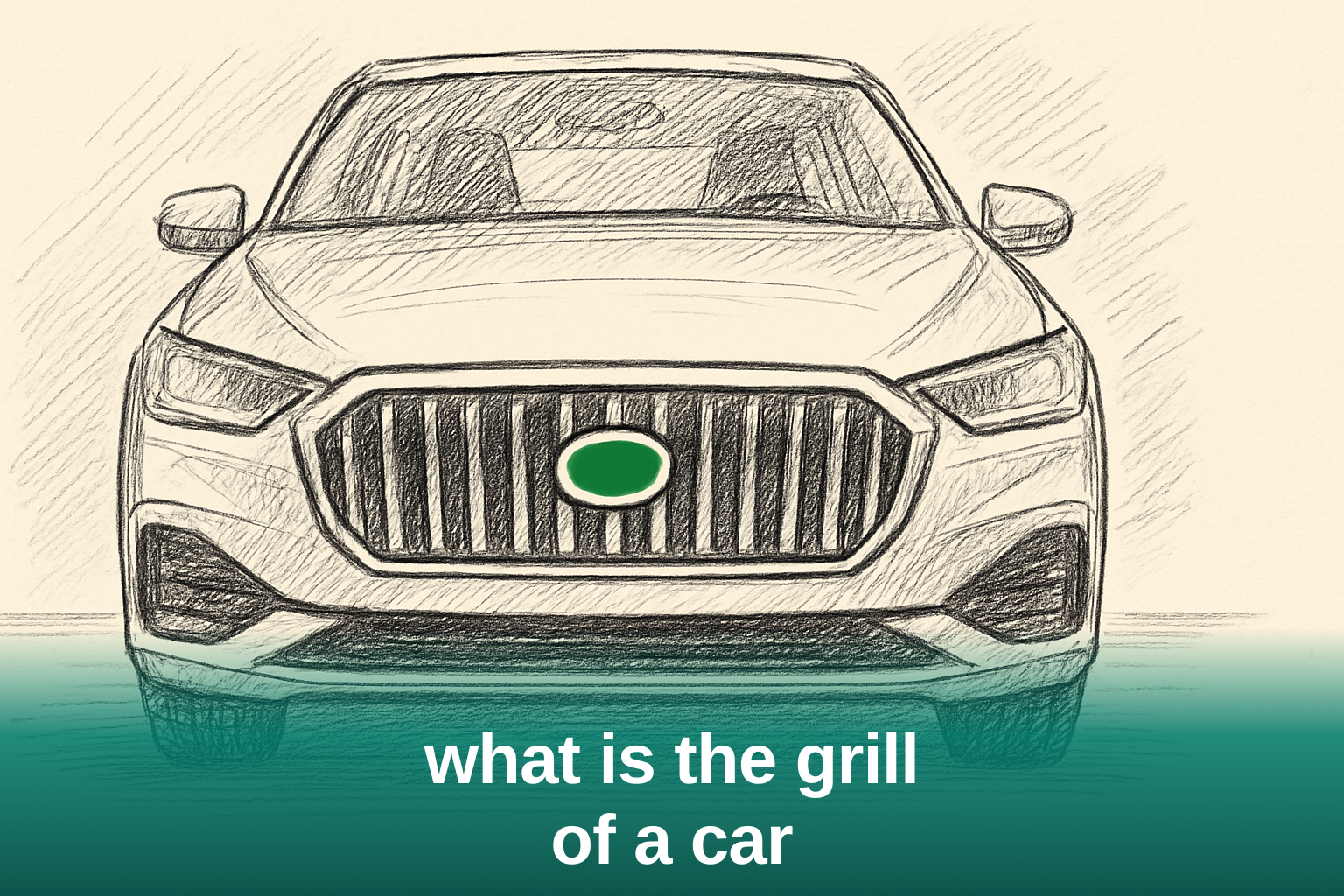

Walk through any parking lot and you’ll notice faces staring back. Not human ones—the distinct ‘noses’ formed by headlights and that slotted opening between them. Most drivers know it as the grill, yet few realize how much engineering hides behind those slats.
So, what is the grill of a car beyond a styling statement? It is a functional intake that feeds air to your radiator and shields delicate components from debris. In this guide, we will unpack its anatomy, settle the spelling debate, explore designs from classic chrome to electric vehicles, and share practical cleaning tips you can use this weekend.
What Is the Grill of a Car? (The Short Answer)
The grill of a car, more accurately written as “grille,” is the ventilated panel positioned at the leading edge of the vehicle. It bridges the gap between the headlights and inhales fresh air to keep the engine cool. Engineers sometimes refer to it as the radiator grille, nose panel, or latticework, depending on the era and manufacturer.
On most vehicles, it is integrated into the front bumper cover. Classic cars often treat it as a standalone chrome assembly mounted ahead of the hood. Modern grilles can be deceptive; some are sealed plastic “faux” grilles, while others contain active shutters that open and close like mechanical eyelids.
Its placement is no accident. Sitting at the front of the vehicle, it catches oncoming airflow and forces a steady stream through the radiator tucked just behind it. The grille is the primary gateway through which outside air reaches the radiator and engine bay. Whether crafted from glossy black plastic or woven carbon fiber, it remains a recognizable landmark on any car’s silhouette.
Car Grille vs. Grill: Which Spelling Is Correct?
When you are talking about the front of your vehicle, the correct spelling is “grille” with an “e” at the end. The shorter version, “grill,” refers to the cooking device in your backyard. In automotive circles, “grille” is the only accepted spelling for the slatted intake between the headlights.
Confusion is understandable because search engines treat both words as interchangeable. However, professional repair manuals consistently use “grille” when labeling this component. Getting it right helps you communicate clearly with mechanics and order accurate replacement parts. So while “grill” might feel natural, remember that cars breathe through a grille, not a barbecue.
Examples
- Correct: “The chrome grille on that classic Mustang is stunning.”
- Incorrect: “I need to clean the grill of my car.” (This sounds like you are about to cook steaks on the hood.)
- Grill (cooking): “We cooked burgers on the grill last night.”
| Word | Meaning |
|---|---|
| Grille | The front intake of a car (slotted or mesh panel) |
| Grill | Cooking device or the verb “to grill/question” |
What Does the Grill of a Car Do? (5 Key Functions)
A car grille is far more than a decorative frame. It performs at least five distinct jobs that keep your vehicle running safely and efficiently. First and foremost, it manages airflow by directing outside air into the engine compartment, which prevents overheating during highway cruising and stop-and-go traffic alike.
It also acts as a physical shield, catching rocks, leaves, and insects before they puncture delicate radiators or condensers. Beyond protection, grille geometry influences aerodynamic drag, which directly impacts fuel economy at speed. Designers also leverage the grille as a brand signature, turning it into the visual “face” customers recognize from a hundred yards away. Finally, modern variants incorporate active shutters that adapt to driving conditions, balancing cooling needs with streamlined efficiency.
Engine Cooling and Airflow
The most critical mission of any grille is engine cooling. As your car moves, the grille funnels ambient air directly toward the radiator, which dissipates heat from the engine coolant. Without this constant flow, temperatures would climb rapidly, especially during summer commutes or while towing heavy loads.
The radiator relies on a combination of the water pump and natural airflow; when the vehicle is stationary, an electric fan compensates, but at cruising speed, the grille becomes the primary intake. High-performance vehicles often enlarge their grilles or add auxiliary vents to increase this airflow. Without adequate air passing through the grille, engine overheating becomes inevitable, which can warp cylinder heads and blow head gaskets.
Protection from Road Debris
Your grille serves as the first line of defense against the chaos of the roadway. At highway speeds, even a pebble can become a projectile capable of cracking a radiator fin or puncturing an air-conditioning condenser. The mesh, slats, or honeycomb pattern blocks larger objects like twigs, plastic bags, and airborne litter while still permitting air to pass.
In rural areas, grilles take a beating from insect swarms and gravel kicked up by farm equipment. A damaged radiator from debris intrusion can cost hundreds to replace, not counting labor. A structurally intact grille can be the difference between an uneventful road trip and an expensive tow to the repair shop.
Aerodynamics and Fuel Efficiency
Every curve on a car’s body is sculpted to cheat the wind, and the grille is no exception. Engineers carefully size and angle the opening to minimize aerodynamic drag without starving the engine of air. A grille that is too open increases resistance, forcing the engine to work harder and burn more fuel at freeway speeds.
Conversely, a completely sealed front end would overheat the powertrain. Modern vehicles strike this balance through computational fluid dynamics and wind-tunnel testing. Active grille shutters take this further by closing off the intake when cooling demand drops, effectively smoothing the nose of the car. On the highway, an optimized grille design can measurably improve fuel efficiency by reducing drag.
Brand Identity and Aesthetics
Automakers treat the grille as the automotive equivalent of a fingerprint. It is often the first element you notice when a car appears in your rearview mirror. BMW’s kidney grille, Bugatti’s horseshoe arc, Alfa Romeo’s triangular shield, and Jeep’s seven-slot design are instantly recognizable worldwide.
These shapes signal heritage, price point, and personality before you ever read a badge. Designers use width, height, and finish to convey aggression, elegance, or rugged capability. A blacked-out grille suggests sportiness, while bright chrome whispers luxury. The grille is the single most powerful visual cue for brand identity on the entire vehicle.
Active Grille Shutters (NEW)
Active grille shutters represent the cutting edge of intake management. These motorized vanes sit behind the traditional grille face and automatically open when the engine or brakes need cooling—such as during slow traffic or spirited driving. Once the vehicle reaches a steady cruise and temperatures stabilize, the shutters close to create a smoother front profile.
This smart balancing act improves aerodynamics and reduces fuel consumption without any input from the driver. Many mainstream models from Ford, Chevrolet, and Toyota now include them as standard equipment. By dynamically adjusting airflow, active grille shutters merge two traditionally separate functions into one intelligent system.
Anatomy of a Car Grille: Main Parts (NEW)
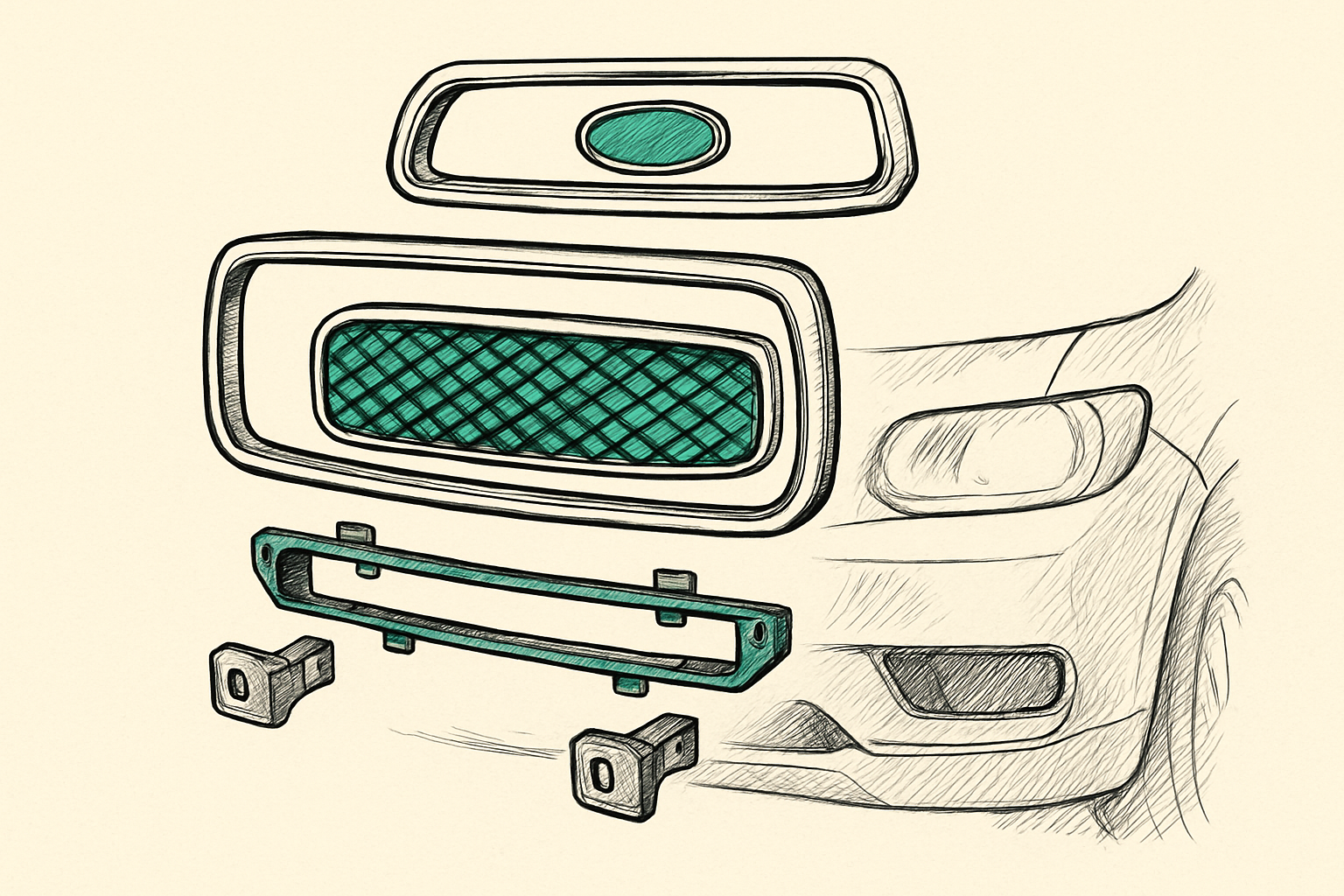
Although it looks like one solid piece from a distance, a car grille is actually a modular assembly of several distinct parts. Understanding this anatomy helps when ordering replacements, speaking with body shops, or performing your own detailing. The outermost structure is the grille frame or housing, which bolts to the bumper cover and defines the overall silhouette.
Inside that frame sits the insert—either mesh, horizontal slats, or a honeycomb lattice—that permits airflow while blocking debris. Most grilles feature a dedicated emblem space, often dead center, where the manufacturer mounts its logo. Surrounding these elements, you will frequently find chrome or gloss-black trim pieces that blend the grille into the headlight and bumper lines. On premium vehicles, radar sensors for adaptive cruise control hide directly behind the grille, making precise reassembly crucial after any front-end repair. The frame is the structural skeleton that determines every other dimension and mounting point.
- Grille frame (housing): The outer boundary that mounts to the body and holds the assembly.
- Mesh or slats: The inner screen that allows air through while stopping debris.
- Emblem space: The designated area for the manufacturer’s logo.
- Chrome or plastic trim: Decorative accents that integrate the grille with surrounding panels.
Types of Car Grilles: From Mesh to Slats
Car grilles come in a surprising variety of patterns and personalities, each tailored to a vehicle’s purpose and target buyer. The mesh grille uses woven or punched wire to create a sporty, open appearance that maximizes airflow for high-performance engines. Slatted grilles rely on horizontal or vertical bars, evoking classic American luxury and truck toughness.
Honeycomb designs arrange hexagonal cells in tight formations, offering a technical, premium look common on German sport sedans. Chrome grilles lean into old-school opulence, reflecting sunlight and signaling prestige. In recent years, the blacked-out grille has surged in popularity, replacing bright finishes with gloss or matte black paint for a stealthy, aggressive stance. Mesh grilles generally offer the least restriction to airflow, making them a favorite among performance enthusiasts.
- Mesh grille: A woven or perforated screen that delivers an aggressive motorsport look and excellent air passage.
- Slatted grille: Horizontal or vertical bars, often chromed, favored by classic sedans and pickup trucks.
- Honeycomb grille: Hexagonal cells packed tightly for a precise, technical aesthetic common on performance models.
- Chrome grille: A finish rather than a structure, associated with luxury branding and vintage styling.
- Blacked-out grille: Gloss or matte black paint that deletes chrome for a modern, menacing face.
What Materials Are Car Grilles Made Of?
The material beneath the paint determines how well a grille survives seasons of salt, sun, and stone impacts. Most modern grilles begin with ABS plastic, a thermoplastic prized for being lightweight, corrosion-proof, and cheap to mold into complex shapes. Chrome-plated finishes—applied over plastic or metal—deliver mirror-like brilliance but demand gentle care to avoid pitting.
Aluminum and steel appear on classic trucks and some rugged SUVs, offering serious strength at the cost of weight and potential rust. At the pinnacle, carbon fiber grilles provide race-bred rigidity and minimal mass, though their price keeps them confined to exclusive sports cars and show builds. Manufacturers select materials based on budget, weight targets, and the desired tactile impression when you walk up to the vehicle. ABS plastic dominates the market because it resists corrosion and accepts paint far better than bare metal.
- ABS Plastic (Thermoplastic): Lightweight, corrosion-resistant, inexpensive, and easy to paint. It is the default choice for mass-market vehicles.
- Chrome-plated plastic or metal: Delivers a premium reflective finish. Requires careful cleaning; harsh chemicals can cause pitting or dullness.
- Aluminum or Steel: Strong and dent-resistant, often found on classic cars and heavy-duty trucks. Heavier than plastic and vulnerable to rust if the coating fails.
- Carbon Fiber: Extremely light and rigid. Reserved for high-performance or luxury vehicles due to high production costs.
| Material | Pros | Cons | Common Use |
|---|---|---|---|
| ABS Plastic | Light, corrosion-free, affordable | Can fade or crack with age | Mainstream cars and trucks |
| Chrome-plated | Premium appearance | Requires gentle care; can pit | Luxury and classic models |
| Aluminum/Steel | Very strong | Heavy; can rust | Trucks and vintage vehicles |
| Carbon Fiber | Ultra-light, rigid | Expensive | Exotic and racing cars |
Aftermarket Grilles: Fit, Finish, and Safety Considerations
Swapping a factory grille for an aftermarket design is one of the most popular cosmetic upgrades, but not all replacement grilles are created equal. Many budget options use thinner ABS plastic that warps under summer heat or cracks during minor parking lot bumps. Fitment gaps can channel water into the headlight housings or behind the bumper, leading to electrical issues.
More importantly, grilles that block too much airflow can raise engine temperatures, while those with oversized mesh may fail to stop small stones from hitting the radiator. If your vehicle relies on adaptive cruise control or forward-collision sensors mounted behind the grille, an ill-fitting aftermarket piece can blind these safety systems. Always verify that an aftermarket grille preserves the original airflow rating and sensor clearances before installation.
Seasonal Grille Wear: Salt, UV, and Bug Season Survival
Your grille faces a year-round assault from the elements, yet most owners only notice the damage once corrosion sets in. Winter road salt attacks chrome trim and exposed aluminum, leaving microscopic pits that blossom into rust stains by spring. Intense summer UV fades black plastic housings to a dull gray and makes them brittle.
Spring and early summer cover the mesh with protein-rich bug splatter that etches into paint if left for days. Even autumn leaves can wedge behind slats, trapping moisture against the radiator support. A seasonal inspection takes two minutes but prevents costly refinishing. Rinsing the grille weekly during winter and removing insect residue within 48 hours are the two habits that preserve both appearance and structural integrity.
The Evolution of the Grille: From Classic Chrome to Electric Cars (NEW)
The car grille has traveled a century-long journey from utilitarian necessity to stylistic icon. In the early 1900s, grilles were tall, upright radiators standing apart from the body, polished in brass or chrome because engines needed constant cooling. By the 1950s and 1960s, they morphed into wide, grinning statements of prosperity, with Cadillac and Chevrolet turning chrome bars into sculpture.
As aerodynamics took priority in the late twentieth century, grilles shrank and sank into bumper covers, often rendered in plastic to save weight. Today, the electric revolution is rewriting the script once more. Because battery-powered motors require far less airflow than combustion engines, some designers have eliminated the grille entirely. Tesla largely pioneered this faceless look, while the first-generation Nissan Leaf also skipped the grille—only to reintroduce it in the second generation after customers missed the familiar face. The grille has evolved from a simple heat exchanger into a powerful symbol of automotive identity that persists even when its original function fades.
- Early 20th Century: Large, functional radiators often standing proud of the body, finished in brass or chrome.
- Mid-20th Century: Grilles became central to brand expression, with wide chrome bars signaling prosperity and power.
- Late 20th Century: Plastic integration and aerodynamic downsizing pushed grilles into the bumper cover.
- Electric Vehicle Era: Sealed or deleted grilles on EVs, though some brands reintroduce faux panels for buyer familiarity.
How to Clean and Maintain Your Car Grille
Because it sits at the tip of the vehicle, your grille collects an unfair share of road filth. Dried insects, tar, salt, and pollen wedge themselves into every mesh opening and slat gap, dulling the finish and potentially clogging airflow if the buildup is severe. Cleaning it properly requires patience and the right tools, not just a quick blast at the car wash.
Aggressive scrubbing can scratch chrome or snap delicate plastic vanes, while harsh chemicals may leave permanent stains. A methodical approach preserves both the look and the function of this prominent panel. Set aside ten minutes during your regular wash routine, and your grille will continue to look as sharp as the day it left the showroom. Regular cleaning prevents corrosive buildup that can permanently etch plastic and pit chrome finishes.
- Step 1: Pre-soak the grille with water or foam to soften dried bugs and grime.
- Step 2: Gently agitate with a soft detailing brush or sponge. Use an old toothbrush for tight gaps.
- Step 3: Rinse thoroughly with clean water to remove all soap and loosened debris.
- Step 4: Dry with a microfiber towel and apply a protective spray or wax to ease future cleaning.
Frequently Asked Questions About Car Grilles
Even after covering anatomy, materials, and maintenance, many drivers still have specific questions about their car’s front end. Whether you are confused about spelling, worried about a cracked slat, or curious why some electric cars seem to lack grilles entirely, the answers below address the most common points of confusion. These concise responses are designed to settle debates, guide your next steps, and help you communicate confidently with technicians or sellers.
Frequently Asked Questions
The grill (or grille) of a car is the slotted or mesh opening at the front of the vehicle, usually between the headlights. It allows air to flow into the engine bay for cooling while protecting the radiator from debris.
It primarily cools the engine by feeding air to the radiator, protects internal components from road debris, improves aerodynamics to save fuel, and serves as a key part of the vehicle’s brand identity.
The correct spelling is “grille” when referring to the front part of a car. “Grill” refers to cooking equipment or the verb meaning to question intensely.
Many electric vehicles don’t need large air intakes for engine cooling, so manufacturers either remove the grille entirely or use a sealed decorative panel for brand identity. Tesla popularized this faceless look.
It is most commonly called a “grille” or “radiator grille.” Other terms include “nose panel” or “latticework,” though these are less common.
Yes. A cracked or blocked grille can restrict airflow to the radiator, leading to engine overheating. It can also hurt aerodynamics and allow debris to damage internal components.
Use a soft brush and pH-neutral car soap to gently scrub the grille, then rinse thoroughly. Avoid harsh chemicals that can damage plastic or chrome. Applying a protective spray can help repel bugs and dirt.
Final Verdict: Why the Grille Matters More Than You Think
By now, it should be clear that the grille is not merely the face of your car—it is a multitasking guardian of engine health, aerodynamic efficiency, and brand personality. From the earliest brass radiators to today’s active shutters and sealed EV panels, this front opening has adapted to every technological shift while remaining central to automotive identity. Whether you are cleaning bugs off mesh after a road trip or admiring the kidney shape in your rearview mirror, you are interacting with a century of engineering tradition. Treat it with the same attention you give your engine oil, and it will keep your car breathing easy for years to come.
Key Takeaways:
- The correct spelling is grille when referring to the front of a car; “grill” is for cooking.
- A grille’s core jobs are engine cooling, debris protection, aerodynamics, and brand identity.
- Modern vehicles may use active grille shutters to balance airflow and efficiency automatically.
- Clean your grille with pH-neutral soap and soft brushes to avoid damaging plastic or chrome.