
A topic is the subject of a text—usually a single word or short phrase like war, love, or survival. A theme is the full-sentence observation the text makes about that subject, such as "War forces ordinary people to choose between loyalty and survival." Once you know the difference, every book, film, and poem becomes easier to analyze.
A topic is what a text is about — a word or phrase like love, war, or survival. A theme is what the text says about that topic, written as a full sentence: "Survival demands that people abandon who they used to be." In To Kill a Mockingbird, the topic is racism in the American South, while the theme is that prejudice and ignorance perpetuate social injustice. If you are searching for clear topic vs theme examples, this article gives you forty paired pairs from books and films, a comparison table, a theme-statement formula, and a four-step method you can use today.
You will get exactly forty topic-and-theme pairs, a quick table comparing topic, theme, moral, and main idea, a sentence formula with three rules, four steps to find any theme, and a thirty-second test you can run on your own draft.
Quick answer: A topic is a word or phrase (love, war, survival). A theme is a full sentence about life (Love can endure even when it demands sacrifice). Example pair: war → "War forces ordinary people to choose between loyalty and survival."
A topic is what a text is about, expressed as a word or short phrase. A theme is a complete sentence stating what the text reveals about life through that topic. The formula [topic] + [what the text reveals] produces a theme statement. This article provides forty topic vs theme examples from literature and film, plus a four-step method to identify any theme.
Topic vs Theme: The Difference in One Sentence
The gap between topic and theme is the gap between a label and an argument. A topic names what sits on the surface of the story—the concrete subject matter you could list on a quiz card. A theme extracts the story's position about that subject and turns it into a universal claim anyone can debate. You do not need a literature degree to spot it; you need patience to move from naming to judging. When a student writes "love" as the theme of Romeo and Juliet, they have stopped at the topic. When they write that impulsive love intensified by family hatred leads to irreversible tragedy, they have crossed into theme. The same movement happens in every text: identify the raw material, then ask what the text is saying about being human. That single shift transforms a reader into a critic and a writer into a storyteller with intent.
Form is the quickest giveaway. A topic lives as a noun or a short noun phrase—justice, the American Dream, coming of age. A theme lives as a complete sentence with a subject and a verb: justice crumbles when institutions protect privilege instead of people. If you cannot find a verb, you are still looking at a topic.
Origin matters too. A topic is usually explicit; jacket copy, chapter titles, and character dialogue often name it outright. A theme is inferred; you construct it by watching what changes, what repeats, and what the final scene rewards or punishes.
Scope separates them as well. A topic is local and specific to one text. A theme travels; the claim about power you draw from Animal Farm should also spark recognition when you read Macbeth or watch House of Cards.
Examples
- Topic: betrayal → Theme: Betrayal cuts deepest when it comes from the person you trusted to protect you.
- Topic: isolation → Theme: Prolonged isolation distorts reality more effectively than any external enemy.
- Topic: wealth → Theme: The pursuit of wealth cannot recreate the past or buy authentic belonging.
Topic vs Theme vs Moral vs Main Idea: Comparison Table
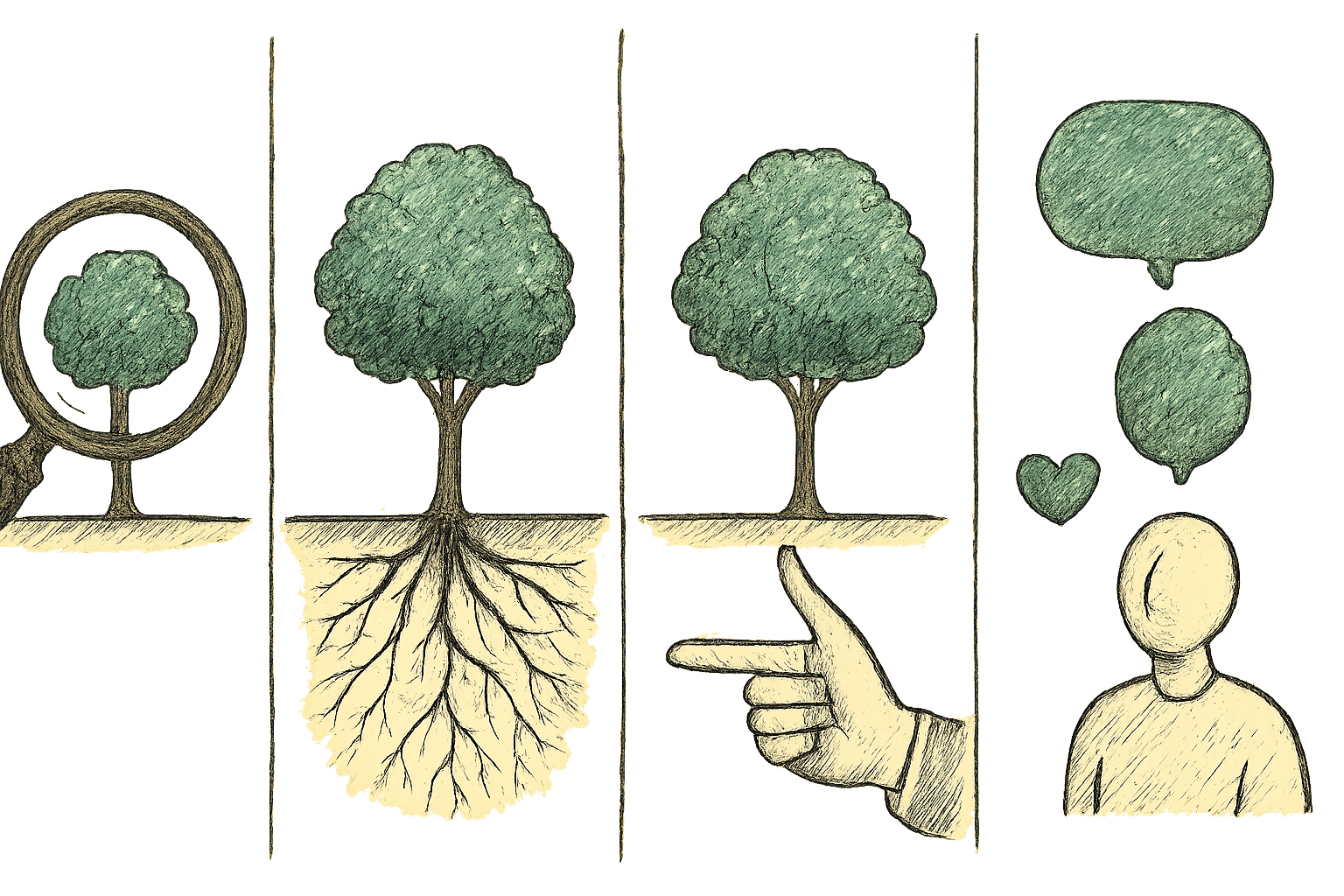
Students often lose points because four related concepts feel like synonyms on a multiple-choice page. A topic is the subject, a theme is the text's argument about that subject, a moral is the lesson the author wants you to adopt, and the main idea is the summary of a specific section or passage. Confusing them is understandable—standardized tests sometimes list all four as plausible answer choices—but each term performs a different analytical job. A moral instructs you to act differently after you finish reading. A main idea tells you what happened on page twelve. A theme observes how the world works and invites you to agree or disagree without dictating behavior. Knowing which tool the question is asking for prevents you from selecting a one-word topic when the prompt demands a sentence-level theme. The table below maps each concept across five criteria so you can compare them at a glance and never mix them up again.
| Topic | Theme | Moral | Main Idea | |
|---|---|---|---|---|
| What it is | The subject of the text | The text's argument about the subject | A lesson or rule for behavior | The central point of a section |
| Form | Word or short phrase | Full sentence with a verb | Imperative sentence or maxim | Declarative sentence |
| Stated or implied | Usually explicit | Implied; must be inferred | Often stated directly | Usually stated in a topic sentence |
| Answers the question | What is this about? | What does this say about life? | What should I do? | What is this passage mostly about? |
| Example from To Kill a Mockingbird | Racism in the American South | Prejudice and ignorance perpetuate social injustice. | Do not judge people before you understand their circumstances. | Atticus Finch defends Tom Robinson despite town opposition. |
The border between theme and moral is the line between observation and instruction. A moral tells you what to do: do not judge people before you understand their circumstances. A theme shows you what is true: prejudice and ignorance perpetuate social injustice. One is a command; the other is a lens.
Main idea differs because it is anchored to a specific passage. The main idea of the courtroom chapter is that Atticus proves Tom Robinson could not have committed the crime. The theme of the entire novel is that the legal system fails when bias replaces evidence. Keep main ideas local and themes universal.
40 Topic vs Theme Examples From Books and Films
If you came here for raw examples, this is your section. Below are forty paired topic vs theme examples drawn from classic literature, modern novels and YA, film and television, and short stories with poetry. Each pair follows the same format: the topic appears as a concise word or phrase, and the theme appears as a full universal sentence that could apply beyond the single text. A one-sentence proof follows every theme to show the exact moment or pattern that supports the claim. Use the index table to scan quickly, or read each subcategory for context. No plot summaries, no clutter—just the pairs you need to see the pattern in action and to settle once and for all what a theme looks like when it is doing its job.
| Topic | Theme | Source |
|---|---|---|
| Racism | Prejudice and ignorance perpetuate social injustice. | To Kill a Mockingbird — Harper Lee |
| Ambition | Unchecked ambition destroys the person who chases it. | Macbeth — Shakespeare |
| Power | Power corrupts when those who seek it mirror the tyrants they replace. | Animal Farm — George Orwell |
| Dreams | The American Dream crumbles under economic forces beyond individual control. | Of Mice and Men — John Steinbeck |
| Love | Impulsive love intensified by family hatred leads to irreversible tragedy. | Romeo and Juliet — Shakespeare |
| Civilization | Civilization is a fragile veneer that erodes when fear replaces reason. | Lord of the Flies — William Golding |
| Marriage | Genuine connection requires overcoming pride and social prejudice. | Pride and Prejudice — Jane Austen |
| Wealth | The pursuit of wealth cannot recreate the past or buy authentic belonging. | The Great Gatsby — F. Scott Fitzgerald |
| Survival | Survival demands that people abandon who they used to be. | Between Shades of Gray — Ruta Sepetys |
| Guilt | Unresolved guilt festers until confronting the past becomes the only path to redemption. | The Kite Runner — Khaled Hosseini |
| Identity | Integrity and self-respect must outweigh social status and passionate dependence. | Jane Eyre — Charlotte Brontë |
| Imperialism | Imperialism masks moral emptiness with the rhetoric of civilization. | Heart of Darkness — Joseph Conrad |
| Sacrifice | Individual sacrifice can ignite collective resistance against oppression. | The Hunger Games — Suzanne Collins |
| Death | Accepting mortality is necessary to live without fear and to defeat evil. | Harry Potter and the Deathly Hallows — J.K. Rowling |
| Words | Words wield the power to both destroy human dignity and restore it. | The Book Thief — Markus Zusak |
| Mortality | Finite time does not diminish the value of love or the need for meaning. | The Fault in Our Stars — John Green |
| Faith | Faith and storytelling are survival tools when reality becomes unbearable. | Life of Pi — Yann Martel |
| Voice | Silence in the face of injustice perpetuates systemic violence. | The Hate U Give — Angie Thomas |
| Kindness | True kindness requires choosing compassion over convenience and fear. | Wonder — R.J. Palacio |
| Revenge | The cycle of revenge offers no resolution, only infinite grief. | Long Way Down — Jason Reynolds |
| First love | Vulnerability in love exposes the wounds that family silence inflicts. | Eleanor & Park — Rainbow Rowell |
| Trauma | Trust built through shared survival can mend what isolation broke. | Six of Crows — Leigh Bardugo |
| Mortality | Knowing life is finite compels people to live with radical honesty. | They Both Die at the End — Adam Silvera |
| Humanity | Love and sacrifice are not exclusive to biological existence. | Klara and the Sun — Kazuo Ishiguro |
| Hope | Hope is an active choice that preserves identity within dehumanizing systems. | The Shawshank Redemption (1994) |
| Class | Economic inequality breeds mutual parasitism that consumes both rich and poor. | Parasite (2019) |
| Chaos | Moral compromise in the name of order creates the very chaos it seeks to prevent. | The Dark Knight (2008) |
| Emotion | Emotional growth requires accepting sadness as essential to joy. | Inside Out (2015) |
| Legacy | Isolationism and vengeance both fail; true leadership bridges past wounds with future responsibility. | Black Panther (2018) |
| Pride | Pride disguised as providing for family becomes a destructive hunger for power. | Breaking Bad (2008–2013) |
| Grief | Professional excellence cannot outrun unresolved family trauma. | The Bear (2022) |
| Family | Kindness within chaos is the only meaningful rebellion against existential emptiness. | Everything Everywhere All at Once (2022) |
| Tradition | Blind adherence to tradition sanctions cruelty without individual accountability. | The Lottery — Shirley Jackson |
| Guilt | Guilt amplifies perception until the mind punishes itself more brutally than any law. | The Tell-Tale Heart — Edgar Allan Poe |
| Sacrifice | Love's value is measured by the willingness to sacrifice what one treasures most. | The Gift of the Magi — O. Henry |
| Equality | Forced equality extinguishes human excellence and individual dignity. | Harrison Bergeron — Kurt Vonnegut |
| Confinement | Suppressing a woman's autonomy drives her mind to reclaim freedom through madness. | The Yellow Wallpaper — Charlotte Perkins Gilman |
| Duty | Responsibilities to society outweigh the seductive pull of escape or rest. | Stopping by Woods on a Snowy Evening — Robert Frost |
| Choice | Nostalgia reshapes memory into justification, not accurate reflection. | The Road Not Taken — Robert Frost |
| Resilience | Historical oppression cannot extinguish the inherent dignity and rising power of the marginalized. | Still I Rise — Maya Angelou |
Classic Literature Examples (1–12)
Examples
To Kill a Mockingbird — Harper Lee
Topic: racism
Theme: Prejudice and ignorance perpetuate social injustice.
Proof: Atticus loses the trial despite proving Tom's innocence, showing the system is rigged.Macbeth — William Shakespeare
Topic: ambition
Theme: Unchecked ambition destroys the person who chases it.
Proof: Macbeth's murder of Duncan triggers his moral collapse and isolation.Animal Farm — George Orwell
Topic: power
Theme: Power corrupts when those who seek it mirror the tyrants they replace.
Proof: The pigs gradually adopt human vices and oppress the other animals.Of Mice and Men — John Steinbeck
Topic: dreams
Theme: The American Dream crumbles under economic forces beyond individual control.
Proof: George must kill Lennie after their farm dream finally seems possible.Romeo and Juliet — William Shakespeare
Topic: love
Theme: Impulsive love intensified by family hatred leads to irreversible tragedy.
Proof: The lovers' hasty marriage and suicide end both their futures and the feud.Lord of the Flies — William Golding
Topic: civilization
Theme: Civilization is a fragile veneer that erodes when fear replaces reason.
Proof: The boys' descent into savagery culminates in Simon's murder and the hunt for Ralph.Pride and Prejudice — Jane Austen
Topic: marriage
Theme: Genuine connection requires overcoming pride and social prejudice.
Proof: Elizabeth and Darcy only unite after each confronts their own flaws.The Great Gatsby — F. Scott Fitzgerald
Topic: wealth
Theme: The pursuit of wealth cannot recreate the past or buy authentic belonging.
Proof: Gatsby's fortune fails to win Daisy's loyalty and ends in his death.Between Shades of Gray — Ruta Sepetys
Topic: survival
Theme: Survival demands that people abandon who they used to be.
Proof: Lina burns her art and trades her dignity to keep her family alive in the labor camp.The Kite Runner — Khaled Hosseini
Topic: guilt
Theme: Unresolved guilt festers until confronting the past becomes the only path to redemption.
Proof: Amir returns to Afghanistan to rescue Sohrab and atone for betraying Hassan.Jane Eyre — Charlotte Brontë
Topic: identity
Theme: Integrity and self-respect must outweigh social status and passionate dependence.
Proof: Jane refuses to become Rochester's mistress and only returns when they are equals.Heart of Darkness — Joseph Conrad
Topic: imperialism
Theme: Imperialism masks moral emptiness with the rhetoric of civilization.
Proof: Kurtz's idealism decays into barbarism as he exploits the Congo.
Modern Novels and YA Examples (13–24)
Examples
The Hunger Games — Suzanne Collins
Topic: sacrifice
Theme: Individual sacrifice can ignite collective resistance against oppression.
Proof: Katniss takes Prim's place and later uses the berries to challenge the Capitol's control.Harry Potter and the Deathly Hallows — J.K. Rowling
Topic: death
Theme: Accepting mortality is necessary to live without fear and to defeat evil.
Proof: Harry walks to his death willingly, stripping Voldemort's power over him.The Book Thief — Markus Zusak
Topic: words
Theme: Words wield the power to both destroy human dignity and restore it.
Proof: Liesel's stolen books bond her with neighbors while Nazi propaganda fuels hatred.The Fault in Our Stars — John Green
Topic: mortality
Theme: Finite time does not diminish the value of love or the need for meaning.
Proof: Hazel and Gus find significance in their limited days together despite inevitable loss.Life of Pi — Yann Martel
Topic: faith
Theme: Faith and storytelling are survival tools when reality becomes unbearable.
Proof: Pi's belief in multiple religions and his animal allegory help him endure the ocean.The Hate U Give — Angie Thomas
Topic: voice
Theme: Silence in the face of injustice perpetuates systemic violence.
Proof: Starr's decision to testify publicly breaks the cycle of unchecked police brutality.Wonder — R.J. Palacio
Topic: kindness
Theme: True kindness requires choosing compassion over convenience and fear.
Proof: Jack Will defends Auggie at personal cost, proving friendship demands courage.Long Way Down — Jason Reynolds
Topic: revenge
Theme: The cycle of revenge offers no resolution, only infinite grief.
Proof: Will's elevator journey reveals how gun violence traps generations in endless mourning.Eleanor & Park — Rainbow Rowell
Topic: first love
Theme: Vulnerability in love exposes the wounds that family silence inflicts.
Proof: Park's acceptance of Eleanor's chaotic home life shows love as refuge, not escape.Six of Crows — Leigh Bardugo
Topic: trauma
Theme: Trust built through shared survival can mend what isolation broke.
Proof: The crew's interdependence forces Kaz and Inej to rely on others despite their past wounds.They Both Die at the End — Adam Silvera
Topic: mortality
Theme: Knowing life is finite compels people to live with radical honesty.
Proof: Mateo and Rufus spend their final day dismantling the masks they wore for others.Klara and the Sun — Kazuo Ishiguro
Topic: humanity
Theme: Love and sacrifice are not exclusive to biological existence.
Proof: Klara's willingness to destroy herself to save Josie challenges the boundary between human and machine.
Film and TV Examples (25–32)
Examples
The Shawshank Redemption (1994)
Topic: hope
Theme: Hope is an active choice that preserves identity within dehumanizing systems.
Proof: Andy spends decades tunneling through concrete, refusing to let Shawshank define him.Parasite (2019)
Topic: class
Theme: Economic inequality breeds mutual parasitism that consumes both rich and poor.
Proof: The Kims infiltrate the Parks' home while the Parks unknowingly exploit their labor.The Dark Knight (2008)
Topic: chaos
Theme: Moral compromise in the name of order creates the very chaos it seeks to prevent.
Proof: Harvey Dent's fall from grace proves Gotham's white knight is destroyable by cruelty.Inside Out (2015)
Topic: emotion
Theme: Emotional growth requires accepting sadness as essential to joy.
Proof: Riley's depression after moving enables her parents to understand her and rebuild connection.Black Panther (2018)
Topic: legacy
Theme: Isolationism and vengeance both fail; true leadership bridges past wounds with future responsibility.
Proof: T'Challa opens Wakanda after seeing Killmonger's radicalization born from abandonment.Breaking Bad (2008–2013)
Topic: pride
Theme: Pride disguised as providing for family becomes a destructive hunger for power.
Proof: Walter rejects financial help and manipulates Jesse to preserve his empire.The Bear (2022)
Topic: grief
Theme: Professional excellence cannot outrun unresolved family trauma.
Proof: Carmy's pursuit of a Michelin star collapses when his brother's suicide resurfaces in the kitchen.Everything Everywhere All at Once (2022)
Topic: family
Theme: Kindness within chaos is the only meaningful rebellion against existential emptiness.
Proof: Evelyn chooses the mundane laundromat over multiverse power because of her love for Joy.
Short Story and Poetry Examples (33–40)
Examples
The Lottery — Shirley Jackson
Topic: tradition
Theme: Blind adherence to tradition sanctions cruelty without individual accountability.
Proof: The villagers stone Tessie only because the lottery has always been done.The Tell-Tale Heart — Edgar Allan Poe
Topic: guilt
Theme: Guilt amplifies perception until the mind punishes itself more brutally than any law.
Proof: The narrator confesses despite the perfect crime, driven mad by the imagined heartbeat.The Gift of the Magi — O. Henry
Topic: sacrifice
Theme: Love's value is measured by the willingness to sacrifice what one treasures most.
Proof: Della and Jim each sell their prized possessions to buy gifts for each other.Harrison Bergeron — Kurt Vonnegut
Topic: equality
Theme: Forced equality extinguishes human excellence and individual dignity.
Proof: Harrison's rebellion against handicaps ends in death, showing the system's brutality.The Yellow Wallpaper — Charlotte Perkins Gilman
Topic: confinement
Theme: Suppressing a woman's autonomy drives her mind to reclaim freedom through madness.
Proof: The narrator's obsession with the wallpaper mirrors her entrapment by patriarchal medicine.Stopping by Woods on a Snowy Evening — Robert Frost
Topic: duty
Theme: Responsibilities to society outweigh the seductive pull of escape or rest.
Proof: The narrator lingers in the woods but continues because promises must be kept.The Road Not Taken — Robert Frost
Topic: choice
Theme: Nostalgia reshapes memory into justification, not accurate reflection.
Proof: The speaker admits both roads were equal yet claims his choice made all the difference.Still I Rise — Maya Angelou
Topic: resilience
Theme: Historical oppression cannot extinguish the inherent dignity and rising power of the marginalized.
Proof: Angelou's repeated defiance frames survival as triumph, not mere endurance.
How to Turn a Topic Into a Theme Statement (Formula + 3 Rules)
Moving from a single word to a full sentence intimidates many writers, but the process is mechanical once you know the formula. You take your topic, ask what the text reveals about it that feels true outside the story, and combine the two into a debatable claim. The result is a theme statement: a single sentence that expresses the story's insight about life through the lens of its chosen subject. It is not a moral, not a summary, and not a vague feeling. It is an argument dressed as observation, and every strong piece of literature has one buried inside its scenes, waiting for the reader to excavate it. The formula is simple: [topic] + [what the text reveals about it] = theme statement. The following three rules will let you build that sentence every time without guessing or falling back on cliché.
- Step 1: Name your topic in one word. Example: ambition.
- Step 2: Ask what the text reveals about that topic. Example: It destroys the person who chases it without limits.
- Step 3: Combine them into a full sentence. Theme statement: Unchecked ambition destroys the person who chases it.
Rule one: the statement must be a full sentence containing a verb. Rule two: it must be universal, so remove character names and specific plot events. Rule three: it must be debatable, not a cliché that everyone already accepts without reading the text.
How to Find the Theme of Any Text in 4 Steps
Finding a theme is not a mystical talent; it is a sequence of four observable moves. You start with the concrete events, watch how the protagonist is transformed, track the ideas and images that refuse to leave the narrative, and finally translate your discovery into one universal sentence. This method works for a six-hundred-page novel, a twenty-minute short story, or a film you stream on a weekend. Each step gives you something to look for so you are never staring at a blank page wondering what the teacher wants. Follow the steps in order, and by the fourth you will have a theme statement that holds up to scrutiny.
- Step 1: Summarize the plot and conflict. What is the central problem the protagonist faces? In To Kill a Mockingbird, a Black man is falsely accused in a segregated town.
- Step 2: Watch how the main character changes. What do they believe at the start, and what do they believe at the end? Scout loses her innocence and learns that goodness does not guarantee justice.
- Step 3: Notice repeated ideas, images, and symbols. What keeps showing up? The mockingbird, the Radley house, and the courthouse balcony all point to innocence threatened by prejudice.
- Step 4: Ask what the text says about life, people, or society—and write the answer as one sentence. Prejudice and ignorance perpetuate social injustice.
Worked Example: Topic and Theme in To Kill a Mockingbird
A single novel demonstrates every layer of the topic-theme distinction better than any definition can. Harper Lee's To Kill a Mockingbird is often taught as a book about racism, but that is only the topic. To reach the theme, you have to watch the trial, yes, but also watch Scout's eyes open. You have to notice the mockingbird motif, the Radley house, and the courtroom balcony. Then you have to ask what all of it says about human nature beyond 1930s Alabama. The four steps below walk through that exact journey, ending with three lines that show where topic stops, where moral preaches, and where theme truly lives.
Summarize the plot: Atticus Finch defends Tom Robinson against a false accusation in Maycomb. Watch Scout change: she begins as a fearless child who believes in neighborhood goodness and ends as a witness to systemic failure. Notice repetition: mockingbirds symbolize innocence destroyed by cruelty; the Radley house represents fear of the unknown; the balcony segregates Black spectators from white justice. Translate: the novel argues that prejudice and ignorance perpetuate social injustice.
Topic: Racism in the American South
Moral: Do not judge people before you understand their circumstances.
Theme: Prejudice and ignorance perpetuate social injustice.
Topic vs Theme in the Classroom: 3 Activities That Work
Students do not need another lecture on definitions; they need to feel the difference in their hands. The three activities below are designed for a standard class period and require no technology beyond paper and a timer. Each one isolates a specific skill—sorting, sentence construction, or evidence pairing—and gives immediate feedback that students can hear from peers instead of only from the teacher. Teachers can run them in sequence across a week or choose the one that targets the weakest skill in the room. All three produce student-generated theme statements that can be displayed on walls or revised into formal essays later.
- Activity 1 — Topic Sort (10–15 min): Give students 20 cards with words or sentences. They sort into "topic" and "theme" piles and defend one card to the class. Materials: index cards. Success criteria: every "theme" pile card is a full sentence with a verb.
- Activity 2 — Sentence Starter Relay (15 min): Each student writes a sentence beginning with "The author believes that…" The class then crosses off the starter and checks whether a complete sentence with a verb remains. Materials: lined paper. Success criteria: the sentence stands alone and names a universal claim.
- Activity 3 — Theme Swap (15 min): Pairs exchange theme statements and add one piece of textual evidence. They pass the evidence back to the original pair to see if the proof truly fits. Materials: shared texts. Success criteria: three distinct moments in the text support the statement.
Topic vs Theme in Your Own Writing: 5 Fixes for a Weak Theme
Writers often discover that their theme is missing not because they have nothing to say, but because they are saying it in the wrong form. A weak theme usually looks like a moral, a single word, a line spoken by a protagonist, or a claim the plot never actually tests. The five repairs below use a Before-and-After format so you can see exactly how to convert a flat label into a load-bearing sentence. Each fix targets a different stage of the writing process, from first draft to final revision, and all of them keep your story's events at the center of the claim. If the plot does not change when you delete the theme, the theme is not load-bearing yet.
Examples
Problem 1 — You wrote a moral.
Before: Always tell the truth no matter the cost.
After: Honesty often demands a price that relationships may not survive.
Fix: Replace the command with an observation about consequences.Problem 2 — You wrote one word.
Before: Justice.
After: Justice crumbles when institutions protect privilege instead of people.
Fix: Add a verb and a specific condition.Problem 3 — A character says it aloud.
Before: "We have to stand up for what is right."
After: Courage is proved not by proclamation but by the silent choice to act when no one is watching.
Fix: Make the theme emerge from action, not dialogue.Problem 4 — The plot does not prove it.
Before: Hard work always leads to success.
After: Hard work reshapes a person's dignity even when external success remains impossible.
Fix: Adjust the theme to match what actually happens in the story.Problem 5 — Too many themes at once.
Before: The story is about love, war, power, and redemption.
After: War strips away every social role until love becomes the only power left to redeem a person.
Fix: Weave the topics into a single sentence that shows their relationship.
The 30-Second Theme Test
Before you submit an essay or move to the second act of your novel, pause for half a minute. A working theme should survive three quick questions that take less time than brushing your teeth. If you answer yes to all three, your theme is doing its job: it is sentence-sized, evidence-backed, and subtly embedded. If any answer is no, you have a topic, a moral, or an unsupported opinion rather than a theme. The checklist below turns those questions into an interactive filter you can use on any text, including your own.
Result: 3/3 — your theme holds. 1–2/3 — revise the theme statement or deepen the evidence.
Common Mistakes: 6 Sentences That Are Topics, Not Themes
Even confident students and experienced writers fall into the same six traps. They write "love" and call it a theme. They write "Don't judge a book by its cover" and think they have captured the text's insight. They write "The Power of Unity" and mistake a title for an argument. Each mistake below comes with a rewrite that shows why the original fails and how to convert it into a sentence-level theme. Study these before your next standardized test; every answer choice on a theme question is a sentence, so a one-word option is almost always bait. If it sounds like advice, it is a moral. If it is one word, it is a topic.
| Not a theme | Rewrite as a theme |
|---|---|
| Love | Love can endure even when it demands sacrifice. |
| Justice | Justice crumbles when institutions protect privilege instead of people. |
| The Power of Unity | Unity without trust collapses the moment external pressure increases. |
| Don't judge a book by its cover | Preconceptions prevent people from seeing the dignity hidden beneath surface difference. |
| Our experiences shape who we become | A life of only positive experiences is unfulfilling because struggle forges self-awareness. |
| Greed destroys everything | Greed destroys the bonds that make power worth holding. |
On standardized reading assessments, the prompt usually asks which sentence best expresses the theme. Every option is a full sentence. If you see a single word or a phrase without a verb, you are looking at a topic dressed up as a distractor.
How Standardized Tests Ask About Theme (and How to Answer)
Standardized assessments do not ask "What is the topic?" in plain English; they hide the task inside sentence stems that can trick a hurried reader. A question might read, "Which sentence best expresses a theme of the passage?" and every answer choice will be a complete sentence. Yet only one functions as a universal observation rather than a summary of events or a disguised moral. The wrong choices usually retell the plot, praise a single character's action, or offer life advice like "Always help your friends." The correct choice steps back from the narrative and says something about human nature that could also be true in a novel set on another continent. Train yourself to eliminate any option that names a specific character, event, or location; then eliminate any option that tells you what to do. What remains is the sentence-level theme the test is actually targeting, and spotting it becomes mechanical once you know the filter.
FAQ: Topic vs Theme Examples
The questions below appear in classrooms, study groups, and search bars every single day because the difference between topic and theme does not resolve after one explanation. Each answer is concise, paired with a concrete example from literature or film, and phrased differently from the main text so you can quote or memorize it without repeating the exact wording of your source. If you need a quick refresher before a standardized test, a book club discussion, or a revision session for your own manuscript, start here and treat these seven pairs as flashcards you can return to whenever the boundary blurs. They cover definitions, form, famous examples, morals, discovery methods, sentence formulas, and test-taking traps.
Frequently Asked Questions
A topic is what a text is about—a word or short phrase like war, love, or survival. A theme is what the text says about that topic, written as a full sentence with a verb. For example, the topic "war" becomes the theme "War forces ordinary people to choose between loyalty and survival."
No. One word is a topic. A theme needs a full sentence and a verb. "Betrayal" is a topic; "Betrayal cuts deepest when it comes from the person you trusted to protect you" is a theme.
In To Kill a Mockingbird, the topic is racism and the theme is that prejudice and ignorance perpetuate social injustice. In Animal Farm, the topic is power and the theme is that power corrupts when seekers mirror the tyrants they replace. In The Hunger Games, the topic is sacrifice and the theme is that individual sacrifice can ignite collective resistance. See the full list of forty pairs above.
No. A moral is a direct instruction—"Do not judge people before you understand their circumstances." A theme is an open observation—"Prejudice and ignorance perpetuate social injustice." One commands; the other reveals.
Summarize the plot, watch how the main character changes, notice repeated symbols, and ask what the text says about life beyond its pages. Write that answer as one full sentence. See the four-step method earlier in this article.
Use the formula [topic] + [what the text reveals]. For ambition: "Unchecked ambition destroys the person who chases it." For kindness: "True kindness requires choosing compassion over convenience and fear."
Because a theme must be a complete sentence. Standardized tests offer only sentence answer choices, so a single word cannot be a theme. It is almost always a topic.
Final Verdict: Topic Is the What, Theme Is the Why
Topic answers "what is this about?" while theme answers "what does it say about life beyond the page?" The formula—topic plus insight—turns any reading into an argument and any draft into a story with purpose. Pick up the text nearest you, name its topic, and write one sentence about what it reveals. That single sentence is the theme.