
Most people stop at “kind” and “keen” when they think of positive words that start with K. Yet this letter hides gems like “kismet” and “komorebi” that add color to your vocabulary. This guide delivers over 100 legitimate positive K words organized by theme so you find the right term fast. From simple descriptors to profound philosophical terms, these positive impactful words enrich communication while expanding your lexical range. Whether you need words starting with K for creative writing or daily conversation, this collection serves as your comprehensive resource.
This article provides a comprehensive reference of positive English words beginning with the letter K. It includes a complete alphabetical table with definitions and examples, followed by thematic groupings for describing personality, motivation, nature, and compassion. The guide targets ESL learners, writers, and vocabulary enthusiasts seeking precise, uplifting terminology.
The Complete List of Positive Words That Start With K
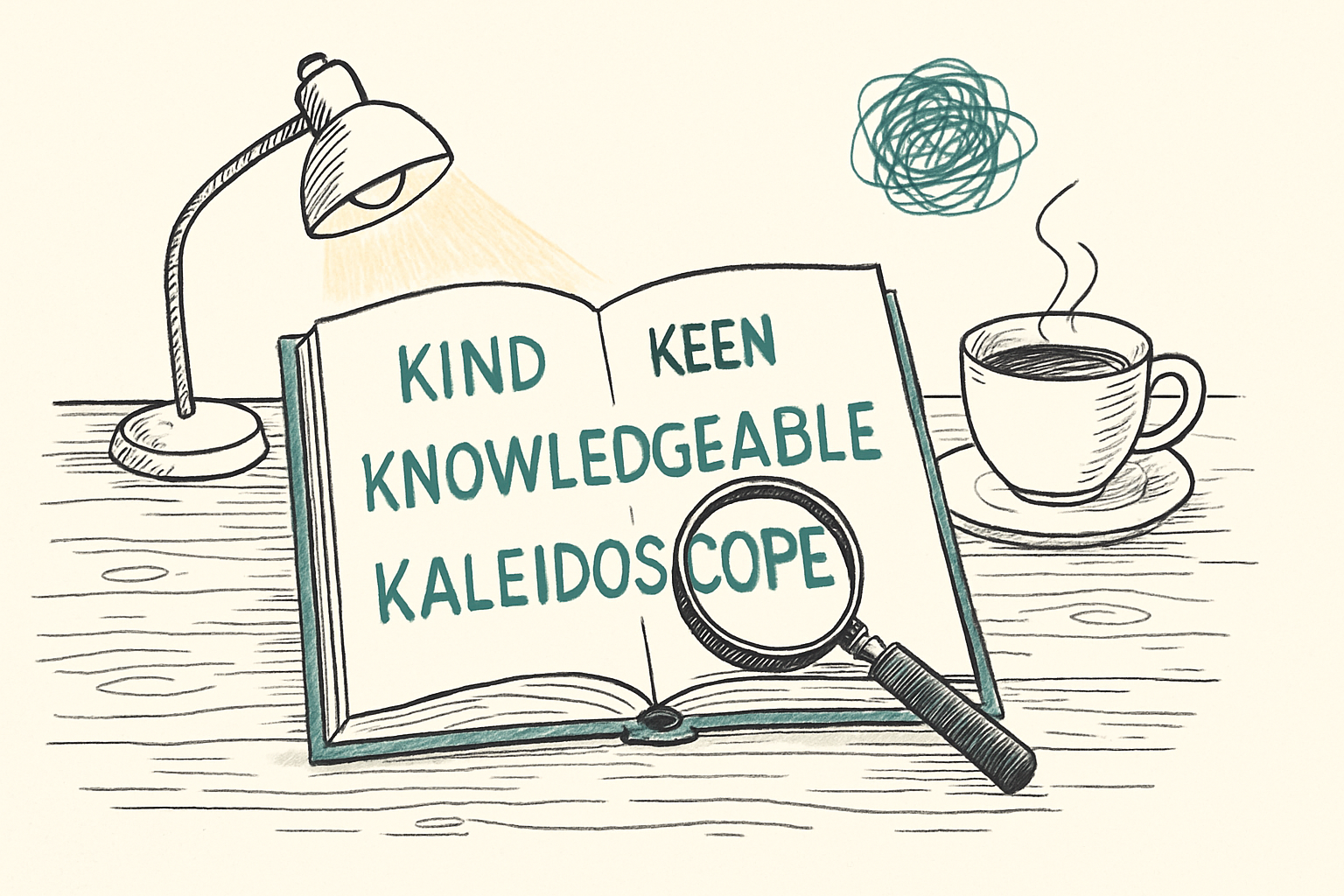
This table presents 100+ positive K words. Each entry includes the part of speech, a brief definition, and a practical example sentence.
Positive K Words to Describe a Person (Personality & Character)
Now that you have scanned the complete lexicon, let us examine how these words function in specific contexts. When you need words to describe someone that start with k, these adjectives capture positive traits with precision.
Kindhearted. A kindhearted colleague brings soup when you are sick. This word suits descriptions of nurses, volunteers, or anyone who puts others first.
Keen. A keen student asks questions long after class ends. Use this to describe sharp minds and intense curiosity.
Knowledgeable. A knowledgeable mentor guides you through complex decisions. This term implies both depth and accuracy of information.
Kooky. A kooky aunt wears mismatched socks with confidence. This label fits playful eccentrics who make life interesting.
Kingly. A kingly leader treats everyone with dignity. The word suggests noble bearing rather than arrogance.
Kempt. A kempt professional always appears tidy. This adjective signals respect for oneself and one’s surroundings.
Knowing. A knowing friend understands your moods without words. This describes quiet intelligence and empathy.
Kindred. Kindred spirits share your values instantly. Use this to express deep connection.
Kissable. Kissable cheeks belong to babies and loved ones. This expresses affectionate attraction.
Kid-friendly. A kid-friendly neighbor patiently answers endless questions. This marks patience and safety.
Keen-witted. A keen-witted debater responds faster than others think. This highlights mental speed. A person with keen wit combines humor and intelligence effortlessly, often seeing connections that others miss until pointed out.
Kick-ass. A kick-ass director delivers results under pressure. This slang conveys toughness and competence.
Konfident (Confident). While “confident” starts with C, the slang spelling “konfident” appears in modern texts to emphasize swagger. Use standard “confident” in formal writing.
Examples
- The kindhearted nurse stayed late to comfort worried patients.
- His keen mind solved the puzzle before anyone else.
- She has a kooky habit of collecting vintage salt shakers.
- The kingly ambassador impressed everyone with his dignified manner.
Inspirational and Motivational K Words
Beyond static traits, many K words propel action and improvement. These encouraging words that start with k fuel ambition and spark action.
Kaizen. This Japanese term for continuous improvement reminds us that small daily changes create massive results. Start with kaizen to avoid overwhelming goals.
Kickoff. Every great achievement needs a kickoff. Mark the start of your project with ceremony to build momentum.
Kickstart. When energy lags, kickstart your morning with cold water and movement. This word implies forceful initiation.
Kudos. Give yourself kudos for finishing difficult tasks. Recognition fuels further achievement.
Knack. Trust your knack for specific skills. Natural talent plus practice creates excellence.
Know-how. Technical know-how separates dreamers from doers. Acquire practical skills through repetition.
Key. Identify the key factors in any success. Focus on these essential elements.
Keystone. Integrity acts as the keystone of reputation. Remove it, and everything collapses.
Kingpin. Become the kingpin of your own life. Take charge of decisions and direction.
Kismet. Trust that kismet brings opportunities. Preparation meets destiny.
Karma. Positive karma rewards generous actions. Give freely without expectation. Beyond karma lies the Japanese concept of ikigai, where mission meaning crystallizes into daily purpose. Gaining ikigai insight requires honest reflection on what you love, what you excel at, what the world needs, and what sustains you financially. When you view ikigai as a practical tool rather than abstract philosophy, this view ikigai insight transforms from mere self-help into actionable life design.
Tips
- Use “kaizen” in performance reviews to demonstrate commitment to growth.
- Replace “start” with “kickstart” to add energy to project descriptions.
- Offer specific “kudos” rather than generic praise to motivate teams.
- Build your professional “know-how” through deliberate practice.
Beautiful and Unique K Words for Nature
The natural world offers its own K vocabulary that evokes beauty and wonder. These beautiful words that start with k capture the elegance of landscapes, weather, and wildlife.
Kaleidoscope. Autumn forests become a kaleidoscope of color. This word suits any shifting, multicolored scene.
Komorebi. The Japanese term for sunlight filtering through leaves describes a specific, peaceful light. Use it in poetry or reflective writing.
Kelp. Underwater kelp forests sway with hypnotic grace. This word brings ocean ecosystems to mind.
Kiwi. The small, fuzzy kiwi bird symbolizes uniqueness. It represents natural wonder.
Knoll. A grassy knoll provides the perfect picnic spot. This word suggests gentle, rolling landscapes.
Kookaburra. The laughing kookaburra brings joy to Australian mornings. Its call signals wild happiness.
Kinetic. Rivers display kinetic energy constantly. This term captures motion and force.
Kind and Compassionate K Words to Spread Positivity
Human connection deserves its own vocabulary of care. These kind words that start with k emphasize empathy and warmth.
Kindness. Simple kindness changes the trajectory of a stranger’s day. Practice it deliberately. Truly good good people extend kindness without expectation of return, creating cycles of generosity that strengthen entire communities.
Kindly. Speak kindly to service workers. This adverb softens requests into favors.
Kinship. Feelings of kinship bind communities together. This noun describes chosen family bonds.
Kith. Your kith includes friends and neighbors. Old English gave us this term for close companions.
Kalon. Greek philosophy defines kalon as beauty that comes from virtue. It values character over appearance.
Kindle. Good teachers kindle curiosity in students. This verb describes sparking emotions or flames.
Kvell. Parents kvell when children succeed. This Yiddish term captures overwhelming pride.
Klatch. A coffee klatch provides emotional support. Regular gatherings with kith maintain mental health.
Mnemonic
Remember the “Three Ks of Connection”: Kindness, Kinship, and Kith. These words build bridges between people.
Powerful K Words for Professional Success
Professional environments benefit from precise K terminology. These powerful words that start with k dominate boardrooms and leadership contexts.
Key. Identify key performance indicators early. This adjective signals critical importance.
Kickoff. Schedule a project kickoff to align teams. This noun marks official beginnings.
Know-how. Bring technical know-how to partnerships. This noun phrase indicates practical expertise.
Keystone. Customer service serves as the keystone of retail. Remove it, and the business crumbles.
Kudos. Managers give kudos during reviews. Public recognition boosts morale. Mastering impactful words elevates you from a competent professional to an impactful ninja who commands attention and drives results through precise communication.
For additional vocabulary, review our general list of words that start with K or explore funny words that start with K.
How to Use Positive K Words in Daily Life
Here is how to deploy these terms effectively.
Start a “K-Word of the Day” Challenge. Select one word from this list each morning. Use it in conversation or writing before night falls. This practice builds vocabulary through active recall.
Create Affirmations. Write morning statements with these terms. “I am kind,” “I possess keen insight,” or “I attract positive karma” set a constructive tone.
Enhance Your Writing. Replace weak adjectives with specific K words. Instead of “good job,” write “kudos on your success.” Swap “start” with “kickstart” to add energy.
Describe People with Precision. Move beyond generic compliments. Rather than “She is nice,” say “She is kindhearted and knowledgeable.” Specific words create stronger impressions.
Frequently Asked Questions
The most common positive K words include kind, keen, knowledgeable, key, and kudos. These terms appear frequently in daily speech and writing across contexts.
You can describe a person as kind, kindhearted, knowledgeable, keen, kooky (in a fun way), or kempt (neat and tidy). These words highlight different positive aspects of their character.
“Kaizen” is a powerful word that means continuous improvement. “Kudos” is another strong term for praise and recognition. “Kickstart” implies the initiation of action with great energy.
Beautiful K words include “kaleidoscope” (a changing pattern of colors), “komorebi” (sunlight filtering through trees), and “kismet” (destiny or fate).
Start by learning five to ten new words from our list each week. Try to use them in sentences, write them in a journal, or incorporate them into daily conversations. Practice leads to mastery.
“Kind” is an adjective that describes a person’s nature (e.g., “a kind person”). “Kindly” can function as an adverb meaning “in a kind manner” (e.g., “She spoke kindly”) or as an adjective meaning “benevolent” (e.g., “a kindly old man”).
Yes, words like “key” (key player), “kickoff” (project kickoff), “know-how” (expertise), “keystone” (keystone service), and “kudos” (giving kudos to a team) are common in professional contexts.
Conclusion
This collection of positive words that start with K offers tools for clearer expression and brighter communication. From the philosophical depth of kaizen to the simple warmth of kindness, these terms enhance both written and spoken English. Select a few favorites and employ them this week to notice the difference in your interactions.