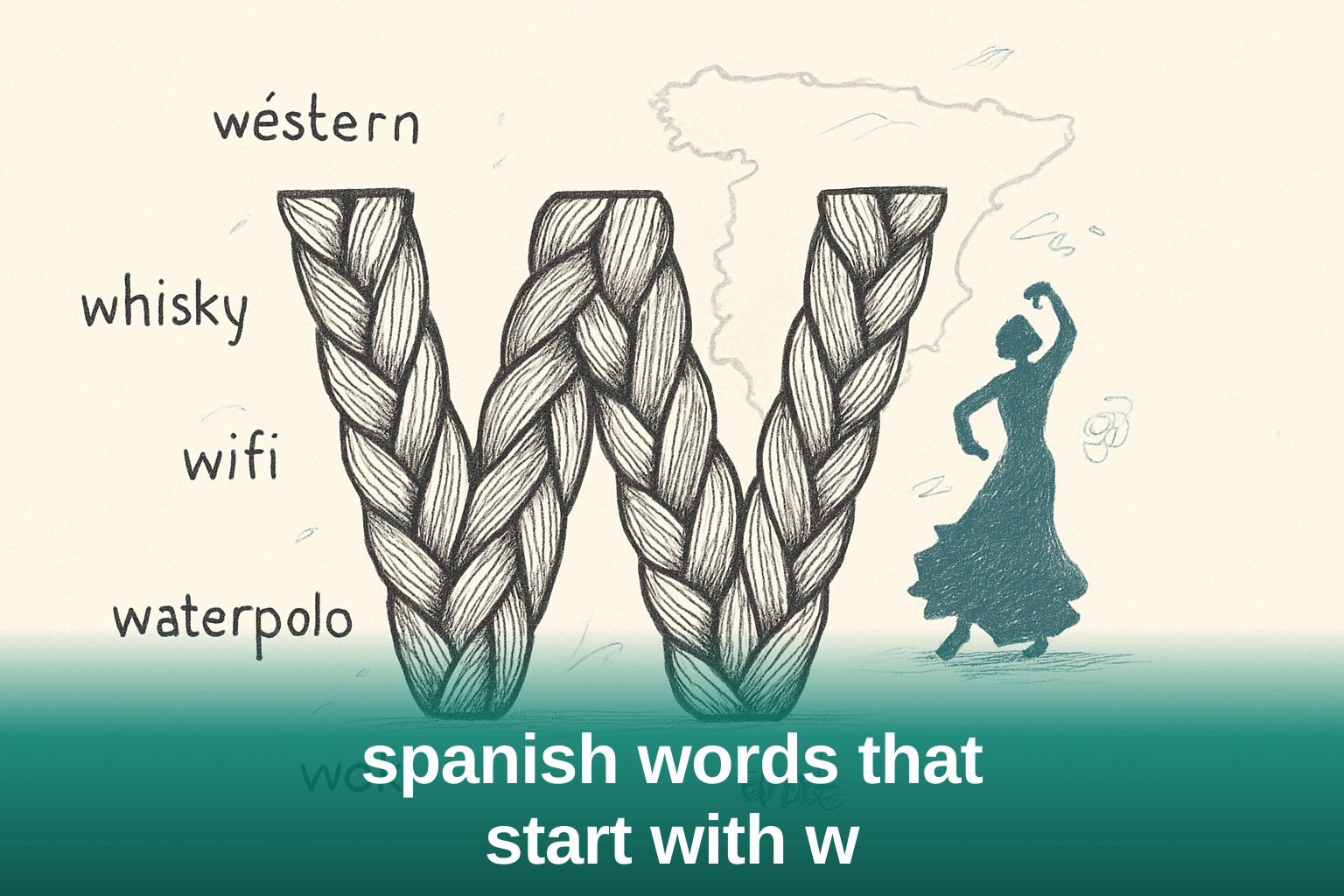

Students often pause when they reach the letter W in Spanish dictionaries. Unlike English, Spanish lacks native words that begin with this letter. Spanish words that start with W remain rare imports—borrowed from English, German, Quechua, and other languages. This guide lists every common term, explains how locals pronounce them, and shows when to use them. Students who learn spanish often treat this guide as a beginner bookmark bookmarked for ongoing study.
- Pronunciation follows origin: German words use B (Wagner = Bagner), English words use U or GW (whisky = gwis-ki), and Quechua/Asian words use G (wasabi = gasabi).
- High-frequency words include whisky, wifi, web, waterpolo, and windsurf.
- Only two verbs exist: wasapear (to WhatsApp) and webear (to browse idly), both colloquial.
- The RAE recommends “uve doble” in Spain, while Latin Americans often say “doble ve” or “doble u.”
Why Spanish Has So Few W Words
The letter W never existed in Latin, the mother language of Spanish. For centuries, Spanish functioned without it, using “u” or “v” for similar sounds. Merchants and scholars later brought W into the language through foreign terms.
Spanish authorities formally adopted W in 1969 during the X Congress of the Association of Spanish Language Academies. Before this date, dictionaries excluded the letter. The Real Academia Española (RAE) now lists W as the twenty-fourth letter, positioned between V and X. However, no native Spanish word begins with this character. All entries remain borrowed or technical terms.
Names for the Letter W in Spanish
Spanish speakers use four distinct names for this letter. The variation depends on regional preference:
- uve doble — The RAE recommends this form for Spain. It treats W as a double “uve” (the name for V).
- ve doble — Common in Latin America, particularly in Mexico and Central America.
- doble ve — Used in parts of South America including Argentina and Uruguay.
- doble u — A direct translation from English that appears in informal contexts across the Americas.
How to Pronounce W in Spanish Words
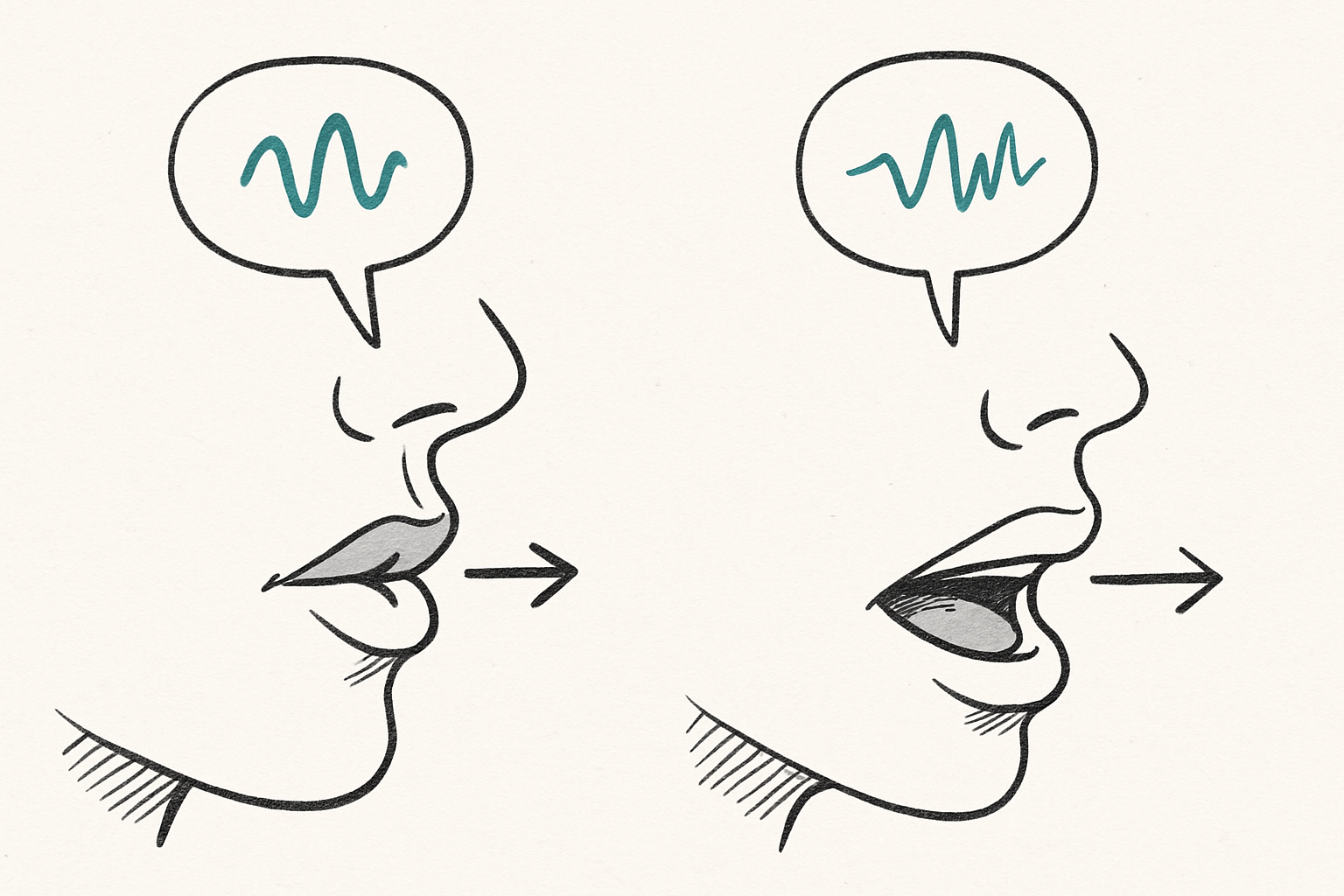
Pronunciation varies significantly based on etymology. Spanish speakers pronounce W differently depending on whether the word comes from German, English, or Eastern languages.
Mnemonic
Remember the Three Bs: B for Berman (Wagner = Bagner), Gu for English (whisky = gwis-ki), and G for Global East (wasabi = gasabi).
German Origin: W Sounds Like B
Words from German treat W as a bilabial fricative similar to Spanish B. The lips meet softly to create a [b] or [β] sound.
- Wagner → [ˈbaɣ.neɾ] (“Bag-ner”)
- westfaliano → [bes.faˈlja.no] (“bes-fa-lia-no”)
English Origin: W Sounds Like U or GW
English loanwords follow two patterns. When W forms a diphthong or stands alone, it sounds like Spanish U [u]. When it precedes a consonant, it often gains a hard G [g] or [gw] onset.
- Newton → [ˈneu̯.ton] (U sound)
- waterpolo → [gwa.teɾˈpo.lo] (GW sound)
- whisky → [ˈgwis.ki] (GW sound)
Eastern and Indigenous Origin: W Sounds Like G
Words from Quechua, Chinese, or Japanese typically render W as a hard G [g].
- wasabi → [gaˈsa.βi] (“ga-sa-bi”)
- wacatay → [wa.kaˈtai] (often [g] in rapid speech)
- Taiwán → [taiˈgan] (“Tai-gan”)
Complete List: Spanish Words That Start With W
The following interactive list presents the most common Spanish words that start with W. Each entry includes IPA transcription, grammatical category, gender and plural forms for nouns, English translation, etymological origin, and a contextual example sentence. This markdown content structure facilitates quick reference.
Notes on Grammar and Usage
Nouns dominate the W lexicon. Gender assignment follows Spanish conventions for loanwords. Most English tech terms become masculine: el wifi, el web, el wallpaper. However, “web” often appears as feminine (la web) in Spain. “Whisky” remains masculine, while “whiskería” (bar with hostesses) adopts feminine gender due to the -ía suffix.
Adjectives that start with W include wagneriano/a, washingtoniano/a, and westfaliano/a. These follow standard gender agreement rules. The term “wifi” functions as an invariable adjective in technical contexts: zona wifi (Wi-Fi zone) does not change to zona wifa. Understanding these spanish adjectives helps master agreement rules.
Verbs number only two: wasapear (to send WhatsApp messages) and webear (to waste time online; in Chile, to joke around). Both conjugate as regular -ar verbs, but neither belongs in formal writing.
Slang and Regional Spanish Words That Start With W
Colloquial speech generates the most dynamic W vocabulary. These terms vary dramatically by country.
Mexican Slang: Wey (Güey)
“Wey” (also spelled “güey”) functions as ubiquitous Mexican slang. It translates roughly as “dude” or “buddy.” Among friends, it signals camaraderie: “¿Qué onda, wey?” (What’s up, dude?). With strangers, it might sound disrespectful. The RAE recognizes “güey” as valid Mexican Spanish.
Technology Verbs: Wasapear and Webear
“Wasapear” appears from Mexico to Argentina, describing the act of sending WhatsApp messages. “Webear” serves a dual purpose: in most countries, it means to waste time online; in Chile, it means to joke around. Use these only in casual conversation.
Quechua Contributions
Beyond European loanwords, Spanish incorporates W-terms from Quechua. Wacatay (an aromatic herb used in Peruvian cuisine) and wachuma (the San Pedro cactus) represent Andean flora. These words remain rare outside botanical or regional contexts.
Common Mistakes and Usage Notes for Spanish W Words
Formal vs. Informal Register
Most W-words belong to casual speech. In formal writing, substitute Spanish equivalents:
- Use güisqui instead of whisky in academic texts (though whisky remains acceptable).
- Replace web with sitio web or página web in official documents.
- Say conexión inalámbrica rather than wifi in technical specifications.
- Avoid wasapear and webear entirely in professional contexts.
Spelling Variations
The RAE accepts both foreign spellings and Hispanicized versions:
- watt / vatio (vatio preferred in formal contexts)
- water (toilet) / váter (váter preferred)
Gender Agreement
Adjectives from proper names follow standard agreement rules:
Examples
- Un músico wagneriano (masculine) / Una sinfonía wagneriana (feminine)
- Los estudios wagnerianos (masculine plural) / Las óperas wagnerianas (feminine plural)
Remember that wifi remains invariable: la red wifi, los cables wifi.
Frequently Asked Questions
Yes, approximately 50 exist, but all are loanwords from English, German, Quechua, or other languages. No native Spanish words begin with W.
It depends on origin. German words use a B sound (Wagner = Bagner). English words use U or GW (whisky = gwis-ki). Eastern words use G (wasabi = gasabi).
The most frequent terms are whisky, wifi, web, and waterpolo. Among slang terms, wey dominates Mexican Spanish.
Yes, wey (or güey) is recognized by the RAE as Mexican slang meaning “dude” or “guy.”
No native verbs exist. Two colloquial verbs appear: wasapear (to message via WhatsApp) and webear (to browse idly or joke around).
Spanish speakers say “uve doble” (Spain), “ve doble,” “doble ve,” or “doble u” (Americas). The RAE recommends “uve doble.”
Conclusion
Spanish words that start with W occupy a unique linguistic niche. They signal foreign origin immediately, whether they arrive from English technology (wifi), German opera (wagneriano), or Andean botany (wacatay). Master these terms by learning the three pronunciation rules—B for German, U/GW for English, and G for Eastern languages—and by respecting the informal register of slang like wey and wasapear. While the letter remains a guest in the Spanish alphabet, these words have earned their place in modern speech. For authentic practice, try free class opportunities with programs like el aula azul to improve your Spanish fluency.