
This article provides general legal information for educational purposes and is not a substitute for professional legal advice. Consult a qualified attorney for guidance on your specific situation.
Despite clear legal boundaries, people confuse burglary and robbery daily in newsrooms and police reports. A headline might say a home was "robbed" while the family vacationed, when in fact no force against a person occurred—legally, that scenario is burglary. Understanding what's the difference between burglary and robbery matters whether you are reading a police report, supporting a loved one facing charges, or protecting your household. This article breaks down the elements, compares theft, and outlines penalties so you can navigate these charges with confidence.
Quick Answer: What's the Difference Between Burglary and Robbery?
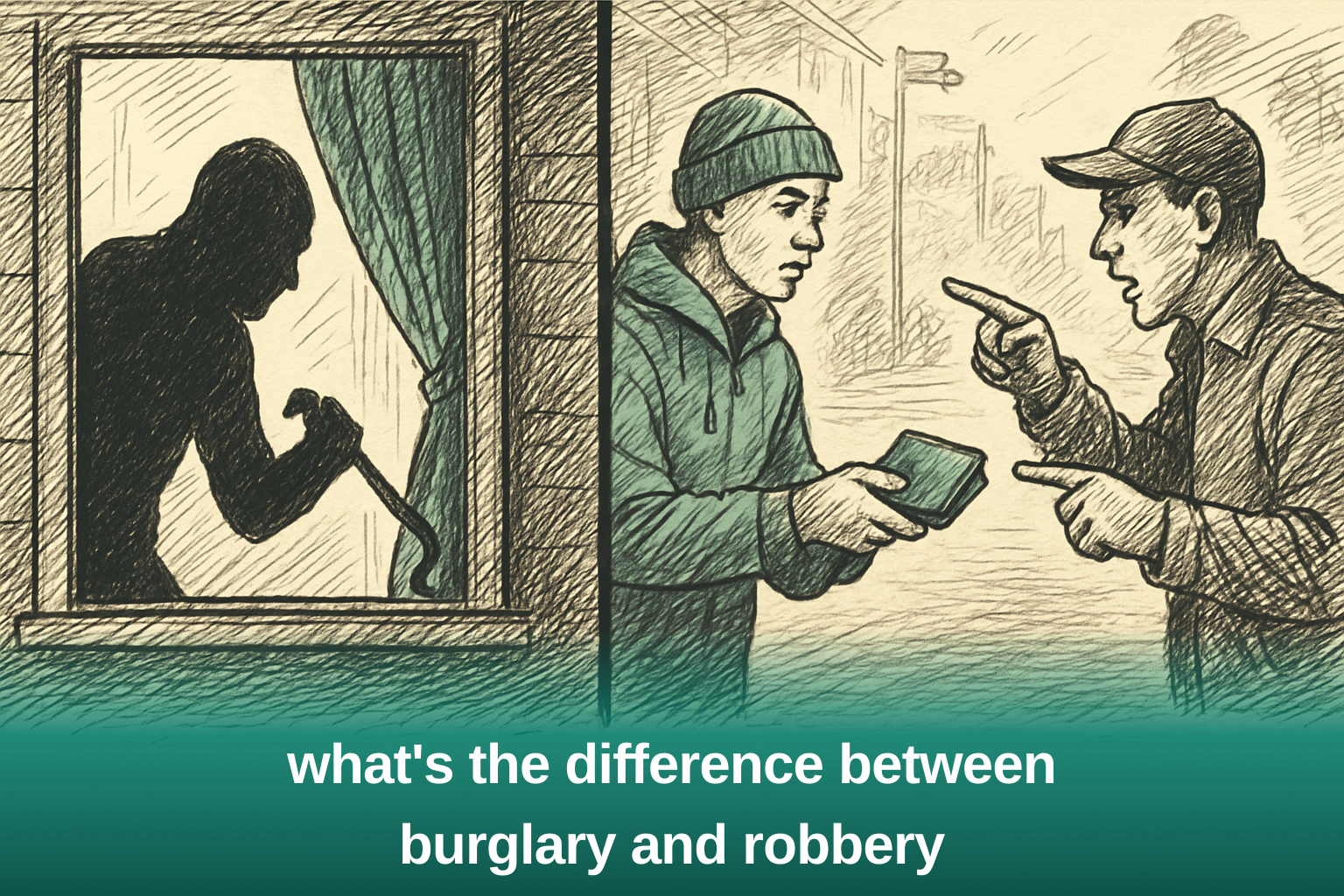
If you need a fast way to separate these two crimes, focus on the target and the method. Burglary concerns unauthorized entry into a structure with wrongful intent; robbery concerns taking valuables from a person through violence or intimidation. The law punishes robbery more harshly as a violent crime, yet home-invasion burglary of an occupied residence can trigger sentences of 20 to 30 years that rival those for robbery. Understanding the burglary and robbery difference helps you interpret police reports accurately: a break-in at a closed store is burglary, while a mugging is robbery.
| Feature | Burglary | Robbery |
|---|---|---|
| Unlawful entry into a building required | Yes | No |
| Force or threat of force against a person required | No | Yes |
| Victim must be present | No | Yes |
| Intent to commit a crime inside | Yes | No |
| Crime against property or person | Property | Person |
What Is Burglary?
At common law, burglary was the "forcible invasion of the right to habitation," limited to breaking into a dwelling at night. Modern statutes have expanded the scope to include offices, warehouses, and vehicles. The offense is complete when the offender crosses the threshold of a structure without permission and with the intent to commit theft, assault, or another felony inside. Completion of the intended crime is not required; fleeing empty-handed after entry still supports a charge. Defenses may arise when the building was abandoned, open to the public, or the defendant was licensed to enter.
What Is Robbery?
Robbery is larceny amplified by aggression against a victim. It requires the taking of property from another person or in their immediate presence through force, intimidation, or threat of imminent bodily harm. The victim must be present, and the offender must intentionally overcome the owner's will. Because the crime directly endangers human life, legislatures classify it as an offense against the person rather than mere property loss. Sentences escalate dramatically when a weapon is used or serious bodily injury occurs.
What's the Difference Between Burglary and Robbery? Key Distinctions
When placed side by side, the distinction is unmistakable. Burglary targets a structure; robbery targets an individual. A burglar enters without permission to commit theft, assault, or another felony inside, and the crime is complete upon entry with intent. A robber bypasses the structure and uses force or fear to seize valuables directly from the victim. While both are serious felonies, robbery generally triggers harsher penalties because it involves immediate physical danger. Yet this gap narrows in home-invasion scenarios, where occupants are placed at risk.
What's the Difference Between Burglary and Robbery? Real-World Examples
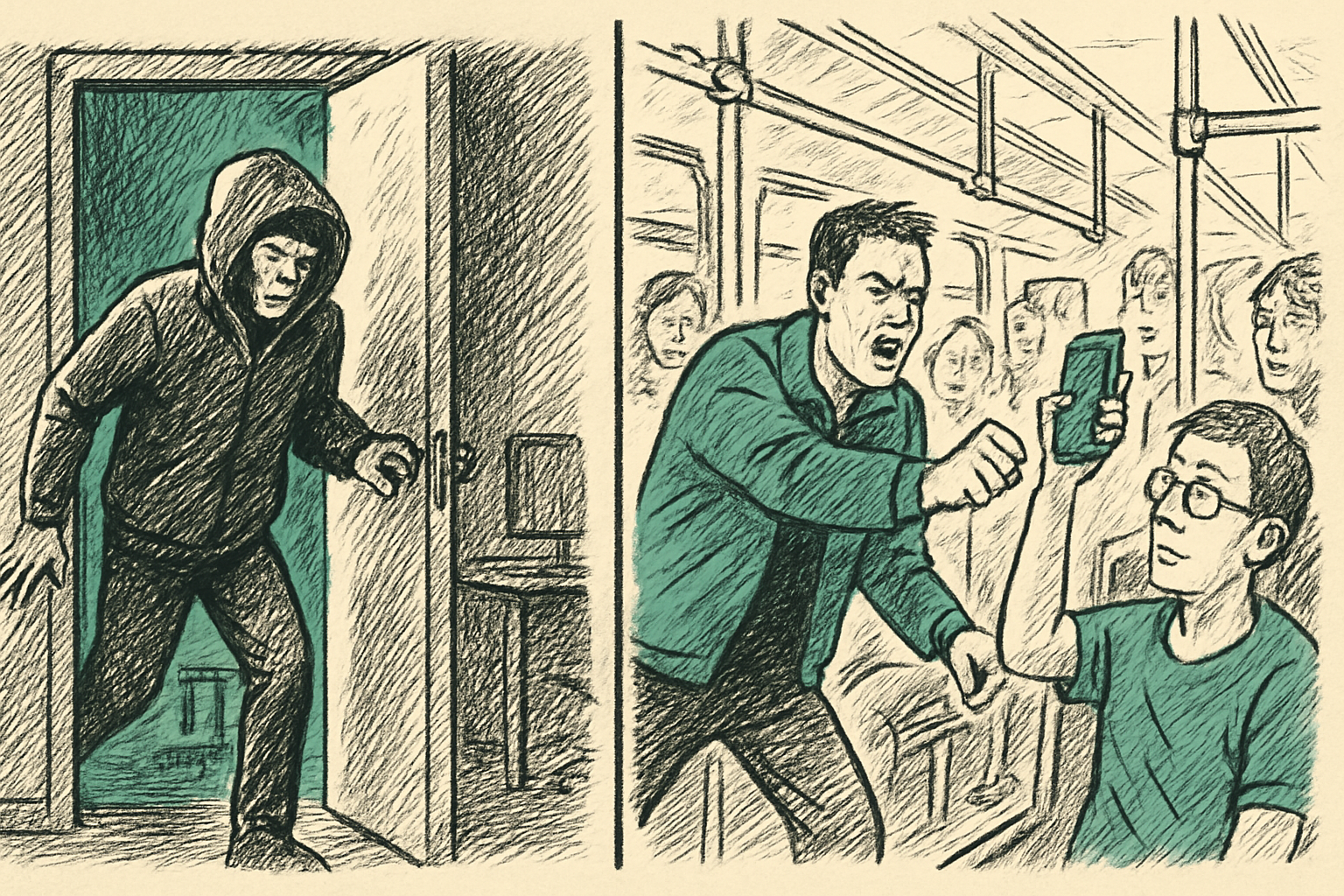
The following scenarios show how the same general event—taking someone else's property—can be classified differently depending on where and how it happens.
Breaking Into an Empty Home
Examples
- Scenario: A person pries open a window and enters a vacant house to search for jewelry.
- Why it's burglary: There was unlawful entry with intent to steal. No one was present, and no force was used against a person.
- Possible charges: Residential burglary.
Mugging on the Street
Examples
- Scenario: An individual corners a pedestrian, grabs their backpack, and threatens violence if they resist.
- Why it's robbery: The property was taken directly from the victim through threat of immediate force.
- Possible charges: Robbery, with sentencing exposure commonly ranging from 10 to 30 years.
Home Invasion with Confrontation
Examples
- Scenario: An intruder breaks into an occupied home, threatens the resident with a knife, and demands a wallet.
- Why it's both: The break-in satisfies burglary; the threat and taking from the person constitute robbery.
- Possible charges: Both burglary and robbery, plus potential weapons charges.
What About Theft? How It Compares
Theft—often called larceny—is the unlawful taking of property without consent, force against a person, or unlawful entry. It is the foundational act that can escalate into burglary or robbery. Stealing a phone from a café table while the owner looks away is theft. Snatching it from the owner's hand and shoving them is robbery. Breaking into the café after hours to steal from a storage room is burglary. Because theft lacks forced entry or violence, it is generally punished as a misdemeanor or low-level felony.
Can You Be Charged With Both Burglary and Robbery?
Yes. When a defendant unlawfully enters a building with criminal intent, burglary is satisfied. If the defendant then encounters an occupant and uses force or threats to steal, robbery also applies. Because the two crimes require proof of distinct elements—unlawful entry versus force against a person—the double jeopardy clause does not bar conviction for both. When both charges stick, sentencing exposure often increases significantly.
Penalties: What's the Difference Between Burglary and Robbery?
Both are felonies, but specific penalties depend on circumstances. Burglarizing an unoccupied non-residential building might yield up to ten years. Entering an occupied residence—often termed home invasion—can escalate to twenty or thirty years, especially if the offender was armed. Robbery penalties generally start at ten years and can reach thirty or more; armed robbery often triggers mandatory minimums. In Pennsylvania, for instance, burglary of an occupied structure is a first-degree felony carrying up to 20 years, while first-degree robbery carries the same maximum. The presence of a weapon, injury, or prior record pushes sentences toward the maximum.
Common Defenses to Burglary and Robbery Charges
Defending against these charges means attacking the elements the prosecution must prove. For burglary, counsel may argue the defendant lacked intent to commit a crime inside, believed they were entering their own home, or had permission to be in the building. For robbery, the defense frequently centers on the absence of force or threat; without evidence of intimidation or violence, the state may be left with only a theft charge. Mistaken identity is also a powerful defense in robbery cases.
- Step 1: Remain silent and ask for an attorney.
- Step 2: Do not discuss your case with anyone except your lawyer.
- Step 3: Gather any evidence that supports your version of events (receipts, witnesses, surveillance footage).
- Step 4: Follow your attorney's advice regarding plea deals or going to trial.
What to Do If You're a Victim
If you are a victim, prioritize personal safety. During an active robbery, comply with demands and avoid sudden movements. Once safe, call emergency services and request medical attention if needed. For burglary discovered after the fact, do not enter if you suspect the intruder remains inside; retreat and contact law enforcement. Document all damage and missing items with photographs for your insurance claim and police report. Contact your bank and credit card issuers to cancel stolen cards, and reach out to local victim advocacy organizations for support.
Frequently Asked Questions
Frequently Asked Questions
Burglary centers on unlawfully entering a building with intent to commit a crime inside. Robbery centers on taking property from a person through force or intimidation. One violates property; the other violates personal safety.
No. They are distinct offenses with separate legal elements. Burglary is a property crime, whereas robbery is a violent crime against a person.
Theft is the unlawful taking of property without force or unlawful entry. Burglary adds the element of trespassory entry into a building with criminal intent.
Robbery adds force or threat of force against a person to the act of theft. Theft can occur without the victim ever knowing or being present.
Yes. If a person breaks into a building and then uses force against an occupant to steal, prosecutors can charge both because the elements differ.
Robbery is generally treated more severely because it is a violent crime against a person. However, home-invasion burglary can also carry penalties of 20 to 30 years.
No. The offense is complete upon unlawful entry with criminal intent, even if the defendant leaves empty-handed.
Conclusion: What's the Difference Between Burglary and Robbery?
Burglary and robbery serve different legal purposes: one protects the security of buildings, the other protects individuals from violent predation. Burglary punishes unlawful entry with criminal intent, while robbery punishes taking property through force or fear. Recognizing these distinctions helps you interpret police reports accurately, understand potential sentences, and make informed decisions. When legal questions arise, consult a qualified criminal defense attorney for guidance specific to your jurisdiction.