

This article provides general information about legal drafting and does not constitute legal advice. Consult a qualified attorney for guidance on your specific situation.
May is permissive — it grants an option or permission without imposing any duty. Shall is mandatory — it creates a binding obligation that typically cannot be waived or modified by agreement. Should is advisory — it recommends a course of action but carries no legal penalty for non-compliance. Understanding the difference between may vs shall is essential because choosing the wrong modal verb can restructure legal rights instantly: it may turn an enforceable duty into a mere option, or impose an unexpected obligation where flexibility was intended. Drafters who confuse these terms risk ambiguous clauses that judges interpret against the author.
A single word in a lease can determine whether a landlord must fix a roof or merely has the right to do so. This article breaks down may vs shall vs should in legal drafting and everyday English, shows how courts interpret each term, and gives you a practical step-by-step method to fix ambiguous clauses before they lead to litigation.
Quick Answer: May vs Shall vs Should at a Glance
"May" signals permission. When a document states that a party "may" take action, it enjoys discretion; the action is allowed but not required. "Shall" signals obligation. It removes choice and commands performance, often triggering strict compliance or breach-of-contract claims if ignored. "Should" signals advice. It sets an expectation or recommendation without creating an enforceable duty. Swapping any of these words in a clause changes the legal outcome dramatically: a tenant who "shall" pay rent can be sued for non-payment, while a tenant who "should" pay rent cannot. Because the stakes are high, drafters must select the precise modal verb that matches their intent.
May grants permission or discretion, shall imposes a mandatory obligation, and should offers non-binding advice. Courts generally treat shall as compulsory and may as permissive, while should lacks enforcement power. Selecting the correct modal verb prevents costly contract disputes and statutory misinterpretation.
What Does "May" Mean? Permissive Language Explained
"May" is the classic marker of permissive language in legal texts, municipal codes, and commercial contracts throughout American jurisdictions. It confers a right, privilege, or broad discretion without creating a corresponding duty, liability, or cause of action. For example, under the Wellsville City Code (section 10-61-3), the word "may" is expressly defined as permissive, while related terms such as "can" and "strive" are treated as functional equivalents. In practice, this means that when a municipality "may issue a permit," it retains full discretion to approve or deny the application based on stated criteria, public need, or budget constraints. The party granted permission is entirely free to act or to refrain from acting, and no court will compel performance simply because the operative text used "may." Because "may" preserves flexibility and avoids rigid mandates, it appears frequently in ordinances and contracts where parties want to allow—but not force—a specific action. However, that same flexibility can become a source of inconsistency if enforcement standards vary across different officials or time periods.
Examples
- The tenant may, at its own expense, paint the walls in the Premises.
- The municipality may issue a permit if the applicant meets the criteria.
- You may submit the form online or by mail.
- May I open the window?
"May" in Contracts and Ordinances
In contracts and local ordinances, "may" gives flexibility but opens the door to inconsistent enforcement. Municipal advisors at Keystone Municipal Solutions note that when an ordinance says an official "may" take action, the resulting discretion can lead to perceived arbitrariness or unequal application. The grant of authority is real, yet it carries no guarantee that the right will be exercised. For this reason, drafters should reserve "may" for actions that are genuinely optional or where case-by-case judgment is desirable. If the matter involves public safety, essential services, or a critical contractual deliverable, "may" is too weak. Parties reading the document must understand that "may" delivers permission, not a promise of performance.
"May" in Everyday English
Outside of legal texts, "may" typically requests or grants permission politely. A guest asks, "May I use your phone?" and a syllabus states, "Students may hand in drafts early." It also expresses possibility, as in "It may rain this afternoon," though in that sense it overlaps with "might." These everyday uses reinforce the core idea: "may" opens a door without pushing anyone through it.
What Does "Shall" Mean? Mandatory Language Explained
"Shall" creates a mandatory obligation and leaves absolutely no room for discretion or negotiation. Courts and code drafters across American jurisdictions treat it as an unequivocal command that must be obeyed without modification or excuse. The Wellsville City Code explicitly defines "shall" as mandatory and stipulates that the obligation may not be waived or modified by private agreement; the same code additionally treats "will" and "must" as synonymous with "shall" for interpretive purposes. When a contract states that a party "shall" perform an act, failure to do so constitutes a material breach and exposes the non-performing party to damages, injunctions, or court orders for specific performance. Because "shall" imposes strict compliance, it is the default choice for statutes, ordinances, and contract provisions where uniformity and full enforceability matter most. The word strips away ambiguity: either the duty is performed in full and on time, or the legal consequences follow immediately. That rigidity is its greatest strength in litigation and, in some commercial contexts, its greatest weakness during negotiation.
Examples
- The tenant shall ensure that all real estate taxes are paid before the due date.
- All official meetings shall be held in the town hall.
- The employee shall invoice the employer on the 1st of the month.
- Shall we dance?
"Shall" in Contracts and Statutes
In contracts and statutes, "shall" removes ambiguity by converting an expectation into a hard requirement. Legal drafters use it to eliminate discretion: when a lease says the tenant "shall" pay rent by the first, late payment is a clear breach. Preply notes that misunderstanding "shall" as a soft term is a common source of contractual disputes. The word is especially prevalent in statutes because legislatures need uniform application; a "shall" provision tells every agency and court that compliance is compulsory. Nevertheless, drafters must avoid using "shall" for actions outside a party's control, because an impossible command invites litigation over force majeure or frustration of purpose.
"Shall" in Questions and Offers
In questions, "shall" functions as an offer or a polite suggestion rather than a command. "Shall I open the door?" and "Shall we begin?" invite agreement; they do not impose obligations. In American English these constructions sound formal or old-fashioned, while British English retains them in everyday conversation. The meaning shifts entirely with context: interrogative "shall" is cooperative, whereas declarative "shall" is coercive.
What Does "Should" Mean? Advisory Language Explained
"Should" sits squarely between permission and obligation: it expresses advice, strong expectation, or professional recommendation, but it does not create a legally enforceable duty on its own. The word originates historically as the past tense of "shall" and survives in formal subjunctive constructions such as "If the king should die unexpectedly, his brother becomes regent." In modern American legal drafting, however, "should" is almost always precatory language—words that encourage a particular action without compelling it through legal sanctions or breach-of-contract remedies. A lease clause stating that the tenant "should promptly inform the landlord of maintenance issues" sets a standard of good behavior and commercial cooperation, yet the landlord generally cannot sue solely because the tenant failed to report a leaky faucet within an arbitrary timeframe. Because it carries no automatic penalty for non-compliance, "should" is ideal for internal guidelines, best-practice manuals, and policy preambles, yet dangerous when a drafter actually intends to create liability, guarantee performance, or secure indemnification.
Examples
- You should always have a spare roll of toilet paper.
- Tenant should promptly inform landlord of any maintenance issues.
- If the king should die unexpectedly, his brother becomes regent.
- Why should I do that?
"Should" as Advice and Recommendation
"Should" conveys an opinion or social expectation rather than a rule. In contracts, it functions as precatory language that urges action without mandating it. Questions such as "Why should I do that?" or "How should I know?" reveal its emotional and rhetorical range. Because a "should" clause lacks teeth, parties rarely face damages for ignoring it. Drafters who want soft guidance—corporate policies, ethical codes, or wish-list provisions—can use "should" safely. When enforceability is required, they must look elsewhere.
"Should" as a Conditional ("If") in Legal Drafting
A specialized but risky use of "should" appears as a conditional substitute for "if." For instance: "Should tenant receive notice of any health or safety violations at the premises, tenant will promptly notify landlord of those violations." Here "should" introduces a future condition rather than advice. While grammatically elegant, this usage often confuses readers who expect the advisory sense. Modern plain-language advocates recommend replacing conditional "should" with "if" to eliminate ambiguity. If the sentence works with "if" substituted, the swap is almost always worth making.
May vs Shall: The Core Legal Distinction
The distinction between may vs shall is the most consequential choice in legal drafting. "May" is permissive: it grants discretion and preserves choice. "Shall" is mandatory: it imposes an absolute duty that courts will enforce. Consider a municipal permitting ordinance. If the code provides that the municipality "may issue a permit," officials retain freedom to deny applications that meet technical criteria but fail discretionary standards. If the code states that the municipality "shall issue a permit," the permit becomes a statutory entitlement once the applicant satisfies every listed requirement; refusal would be ultra vires. Courts routinely apply this dichotomy: "shall" triggers strict compliance, while "may" signals delegated discretion. The Wellsville City Code crystallizes this by equating "shall" with "must" and "will," and "may" with "can" and "strive." One word therefore determines whether a party has a right to performance or merely a hope. Drafters who confuse the two risk converting an intended obligation into an optional program—or vice versa—often with expensive litigation as the result.
Shall vs Should: Obligation vs Recommendation
Although "shall" and "should" share an ancient etymological root, they have diverged into opposite legal functions in modern drafting. "Shall" obliterates choice: it commands action and exposes non-performing parties to immediate breach claims, damages, and injunctive relief. "Should" merely recommends: it states a preference or reasonable expectation while leaving the actor entirely free to decline without legal penalty. In a residential lease, "Tenant shall maintain the premises" creates a binding covenant; failure to repair the roof or replace broken fixtures is actionable in court. "Tenant should maintain the premises" offers housekeeping guidance that a judge will treat as precatory and unenforceable. The emotional tone differs as well. "Shall I call security?" conveys confident readiness to act, whereas "Should I call security?" expresses doubt and actively requests another person's input. In legal documents, that tonal gap translates directly into a liability gap. Because "should" is the past tense of "shall" in grammar but not in legal force, drafters must treat them as unrelated instruments when allocating risk, responsibility, and remedial consequences.
Examples
- The tenant shall pay rent on the 1st. / The tenant should pay rent on the 1st.
- You shall abide by the law. / You should abide by the law.
- Shall I open this door? / Should I open this door?
May vs Should: Permission vs Advice
"May" and "should" both fall short of creating an obligation, yet they operate differently in legal texts and everyday agreements. "May" confers an explicit right: the tenant who "may paint the walls" has been given clear permission, and the landlord is effectively indifferent to whether the brush ever touches plaster. "Should" confers advice: the tenant who "should paint the walls" is being urged to do so for aesthetic or protective reasons, but retains the freedom to leave the walls untouched without any legal penalty. Neither word empowers a court to order specific performance or award damages for non-compliance. However, "may" can create procedural inconsistency—an official who "may" approve a license might approve one applicant and deny an identical rival without explanation—while "should" rarely appears in operative ordinance text because it supplies no objective standard for enforcement. When a norm must be truly binding on all parties, neither "may" nor "should" suffices; the careful drafter must instead choose "shall" or "must" to create an absolute duty.
May vs Shall vs Should: Side-by-Side Comparison Table
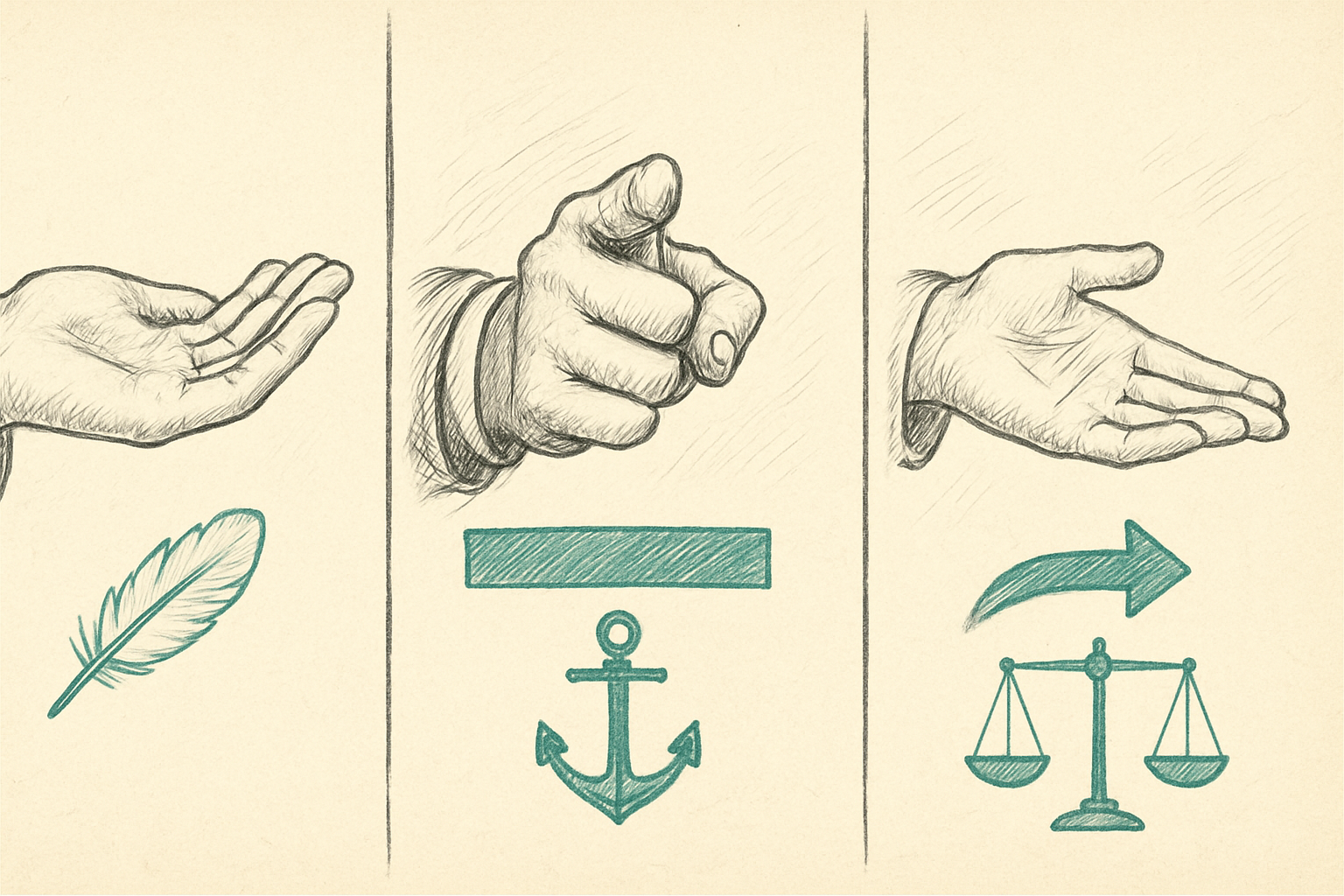
The table below distills the essential differences among the three modal verbs.
| Modal Verb | Meaning | Creates Obligation? | Typical Context | Example Clause |
|---|---|---|---|---|
| May | Permissive / discretionary | No | Ordinances, contracts | The tenant may paint the walls. |
| Shall | Mandatory / obligatory | Yes | Statutes, contracts | The tenant shall pay rent. |
| Should | Advisory / recommended | No | Policy, advice | The tenant should report issues. |
Each word occupies a distinct position on the spectrum of obligation. Selecting the wrong column can reallocate legal risk instantly.
How Courts Interpret May, Shall, and Should
Judges begin statutory and contractual interpretation with a strong presumption: "shall" is mandatory and "may" is permissive. Under the Wellsville City Code, this presumption is codified—"shall" means mandatory and may not be waived, while "may" means permissive. Yet context always matters. A court will read the entire document, including definitional sections that might equate "will" with "shall" or "can" with "may." If the document defines its terms explicitly, that definition controls. The Plain Writing Act of 2010 accelerated a shift away from "shall" because lawyers had used it so inconsistently—sometimes to mean obligation, sometimes future tense, sometimes even permission in older texts. Federal guidance now recommends "must" for obligations to eliminate that ambiguity. For "should," courts almost never imply an obligation; they treat it as precatory or aspirational. The safest practice for drafters is to match the word to the desired legal outcome and to include a definitions section that locks in the meaning. Relying on judicial presumptions is better than nothing, but presumptions can be rebutted by surrounding language.
Common Drafting Mistakes with May, Shall, and Should
Even experienced drafters slip between these modal verbs, and the consequences can be severe. First, using "may" where "shall" is intended converts an obligation into an option; a clause stating that the landlord "may repair the roof" does not require repairs. Second, inserting "should" into normative text produces an unenforceable recommendation when a binding rule was meant. Third, mixing "shall" and "will" in the same document without defining either invites arguments about whether both words create duties or whether "will" merely predicts the future. Fourth, drafting "shall" for acts beyond a party's control—such as "the contractor shall finish before the first frost"—creates an impossible obligation and exposes the drafter to force-majeure disputes. Fifth, using "should" as a conditional without explanation causes readers to mistake an "if" trigger for optional advice. Each mistake shares a common cure: decide whether the conduct is mandatory, permitted, or recommended, then choose the single word that expresses that intent without overlap or ambiguity.
How to Rewrite an Ambiguous Clause: Step-by-Step
When you encounter a clause that feels fuzzy, a six-step audit will sharpen it. Start by identifying the legal effect you need: is the action compulsory, discretionary, or merely encouraged? Once you know the intent, map it to the correct modal verb—"shall" or "must" for obligations, "may" for permissions, and "should" only for advice. Next, verify whether failure to act triggers a remedy such as damages or termination; if so, "should" is almost certainly the wrong choice. Then scan for hidden conditionals disguised as "should" and replace them with "if" to improve readability. After that, read the sentence in the context of the full document to ensure you are not contradicting a definitions section or another operative clause. Finally, confirm that the actor actually controls the performance; if not, soften the obligation or add qualifying language. A clause that begins as "Tenant should maintain the premises" can become "Tenant shall maintain the premises" once you decide that maintenance is a covenant and not a suggestion.
- Step 1: Decide if the action is mandatory, permitted, or recommended.
- Step 2: Choose the matching verb — shall/must for obligations, may for permissions, should for advice.
- Step 3: Confirm that non-performance carries (or avoids) legal consequences.
- Step 4: Replace conditional "should" with "if" wherever possible.
- Step 5: Read the clause in context to avoid contradicting other provisions.
- Step 6: Verify that the performing party actually controls the action.
Plain Language Trend: Why "Shall" Is Losing Ground
Modern legal drafting is turning away from "shall" because decades of ambiguous usage have eroded its reliability. The Plain Writing Act of 2010 directs federal agencies to prefer "must" when imposing legal obligations, and many state and municipal codes have followed suit. The Wellsville City Code, for example, expressly defines "will" and "must" as synonyms for "shall," acknowledging that plain-language alternatives reduce reader confusion. In commercial contracts, drafters increasingly write "must" or "will" instead of "shall" to avoid arguments about whether the word is mandatory or merely descriptive. This shift does not eliminate "shall" overnight—thousands of legacy statutes still depend on it—but it establishes a best practice: new documents should reserve "shall" for limited contexts or replace it entirely with "must." The trend benefits non-lawyer readers, including tenants, consumers, and small-business owners, who rightly find "must" more transparent than "shall."
A Memory Aid: Obligato vs Ossia
Legal drafters are not the only professionals who worry about mandatory versus optional parts. In classical music, an obligato part is obligatory — the composer insists it must be played and cannot be omitted. Bach and Mozart used violin or woodwind obligatos that were integral to the piece. By contrast, ossia denotes an alternative passage: the performer may choose it or stick to the original. Chopin included ossia variants in his Etudes, and Berg’s Violin Concerto offers ossia options. Think of shall as obligato — non-negotiable and mandatory — and may as ossia — a permissible alternative that the actor is free to accept or ignore. Should you ever forget which modal verb imposes a binding duty, remember the concert hall: obligato equals obligation, ossia equals option.
Common Questions About May, Shall, and Should
Frequently Asked Questions
"May" is permissive and optional, granting a right without imposing a duty; "shall" is mandatory and creates a binding obligation. For example, "The tenant may paint" gives permission, while "The tenant shall paint" creates a covenant.
Yes. Courts generally interpret "shall" as mandatory, meaning the duty cannot be waived. The Wellsville City Code, for instance, defines "shall" as mandatory and equates it with "must" and "will."
No. Swapping them reverses the legal meaning: "may" turns an obligation into an option, while "shall" removes discretion. A municipality that "may issue a permit" has a choice; one that "shall issue a permit" does not.
It signals advice or expectation, not obligation. Failing to follow a "should" clause is not a breach of contract. For example, "Tenant should report leaks" encourages action but imposes no penalty for silence.
Because "shall" has become ambiguous through inconsistent use by lawyers. The Plain Writing Act of 2010 recommends "must" for legal obligations to improve clarity.
Courts read "shall" as mandatory and "may" as permissive, but they always examine the full document and its definitions section before finalizing that reading.
May grants permission, shall imposes an obligation, and should offers a recommendation. They sit on a spectrum from optional to compulsory to advisory.
Final Verdict on May vs Shall vs Should
May opens doors, shall locks them, and should merely knocks. In legal drafting, that distinction controls enforceability: choose "shall" or "must" when you need absolute compliance, "may" when you want to preserve discretion, and "should" only for non-binding guidance. Before finalizing any contract, ordinance, or statute, audit every modal verb against the outcome you want a court to enforce. Replacing ambiguous "shall" with "must" and clarifying conditional "should" with "if" will save time, money, and future disputes.