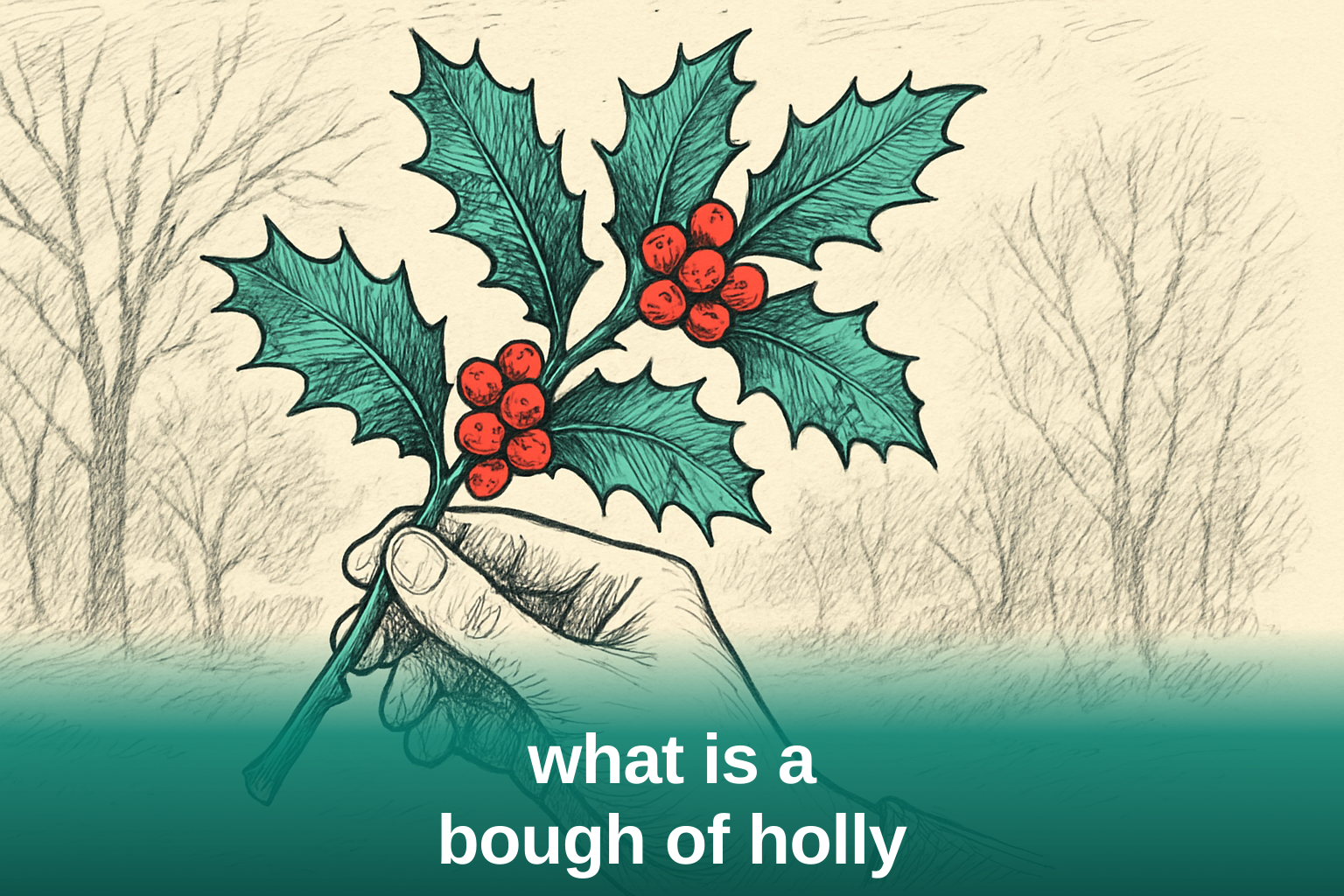

Every December, someone pauses mid-carol to ask the same question: did they just sing about tying a bow, or cutting a branch? A bough of holly is a large branch cut from a holly plant (Ilex genus), an evergreen shrub or tree known for its glossy, spiky green leaves and bright red berries. The phrase owes its fame to the classic carol "Deck the Halls," yet the plant itself carries far deeper roots in winter traditions. In the following sections, we will explore exactly what makes a bough distinct from a sprig, how to identify genuine holly, why ancient cultures revered it, and how to decorate with it safely.
A bough of holly is a large cut branch from the Ilex plant, famous for its glossy evergreen leaves and red winter berries. It carries centuries of symbolism—from Druid protection rituals to Christian nativity traditions—and requires careful handling because its berries are toxic to humans and pets.
What Exactly Is a Bough of Holly?
A bough of holly is, quite simply, a substantial branch cut from a holly plant belonging to the Ilex genus. These plants are evergreen shrubs or small trees that can reach 10 to 15 feet in height, though some species grow even taller. When a major limb is removed for decorative use, florists and carolers alike call the result a bough. The leaves are thick, leathery, and dark green with serrated, often spiny edges that catch the winter light. Bright red berries cluster along the stems, though only female plants produce fruit when pollinated. In botanical terms, a bough refers specifically to a large, main branch rather than a slender twig or offshoot. By contrast, a sprig of holly is a much smaller cutting, typically just a few inches long, meant for tucking into place cards or boutonnieres. If a sprig is a whisper, a bough is the full conversation—substantial enough to drape across a mantel or weave into a doorway garland.
Holly vs. Other Evergreens: How to Identify a Bough
During the holiday season, markets overflow with greenery, and not every red berry belongs to holly. A true bough of holly displays glossy, almost plastic-looking leaves that are dark green, oval, and sharply toothed along the edges. The stems are woody and sturdy, supporting clusters of round, bright red berries that persist deep into winter. Mistletoe, by contrast, has pale, oval leaves arranged in pairs and waxy white berries; it also grows as a parasitic plant high in host trees rather than as an independent shrub or tree. Pine branches are instantly recognizable by their clusters of needles and woody cones, while ivy trails with lobed, palmate leaves and dark purple-black berries. When you are unsure, look for the signature combination of spiny, leathery foliage and crimson fruit on a rigid wooden stem. That pairing is the unmistakable fingerprint of genuine holly, and it is the very look that has inspired centuries of winter decoration.
| Feature | Holly | Mistletoe | Pine | Ivy |
|---|---|---|---|---|
| Leaf shape | Glossy, leathery, spiny edges | Pale, oval, paired | Needles in bundles | Lobed, palmate |
| Berry color | Bright red | Waxy white | Brown woody cones | Dark purple-black |
| Typical use | Wreaths, garlands, centerpieces | Hanging kissing ball or sprig | Christmas trees, garlands | Trailing garlands, ground cover |
| Toxicity | Berries toxic to humans and pets | Berries and leaves toxic | Non-toxic; needles can irritate | Berries and leaves toxic |
How to Choose the Best Boughs of Holly for Decorating
Not every branch at the florist or garden center will survive the season looking vibrant. When selecting a bough of holly, inspect the leaves first: they should feel supple and look glossy, not dull or curled at the edges. Gently shake the stem; if more than a few berries drop, the cutting is already past its prime. The bark should appear smooth and firm, without excessive dryness or cracking near the cut. If possible, choose branches with berries at varying stages of ripeness, as overripe fruit falls quickly. For the fullest displays, mix female branches heavy with berries alongside leafy male branches for textural contrast. Ask your supplier when the holly was cut; fresher is always better. A bough harvested within the last 48 hours will absorb water readily and hold its color far longer than one that has been sitting in cold storage for weeks.
Why Do We Sing "Deck the Halls with Boughs of Holly"?
The phrase "deck the halls with boughs of holly" owes its fame to the beloved Christmas carol "Deck the Halls," but the melody itself is much older than the English words. It originates from the Welsh New Year's Eve tune "Nos Galan," which dates back at least to the sixteenth century. In the mid-1800s, American lyricist Thomas Oliphant penned the familiar English words, replacing the original Welsh celebrations with universal images of holiday greenery. To "deck" means to adorn or decorate, while "bough" specifically denotes a large branch rather than a mere twig. Together, the line conjures an image of abundance: sweeping evergreen limbs draped around a room to welcome winter guests. The carol transformed a simple botanical reference into enduring cultural shorthand for festive hospitality, ensuring that generations of listeners would forever associate those spiny green branches with warmth, music, and seasonal joy.
Examples
- "As the halls are still decked with boughs of holly, what's not to like?" — Times, Sunday Times
- "I can deck the hall with boughs of holly as cheerfully as any other 21st-century man." — Times, Sunday Times
- "So deck the hall with boughs of holly, pop another chestnut on the open fire — and get composing!" — Times, Sunday Times
The Symbolism of Holly Through History
Long before it appeared in carols or on greeting cards, holly was revered as a powerful emblem of endurance. Because it remains vibrantly green while other plants succumb to frost, ancient peoples viewed it as proof that life persists even in the darkest months. This singular trait made holly a natural symbol of protection, renewal, and eternal hope across radically different civilizations. From the misty groves of Celtic Britain to the marble halls of Rome and later the candlelit churches of medieval Europe, the plant accumulated layers of meaning. Each culture saw its own reflection in the sharp leaves and winter fruit. The following traditions reveal how one resilient evergreen came to carry such profound spiritual weight, and why cutting a bough was considered an act of communion with nature itself. In every era, the message was consistent: winter does not have the final word.
Celtic and Druid Traditions
Among the Celts and their priestly class, the Druids, holly was sacred. They believed the plant harbored protective spirits, particularly during the winter solstice when the veil between worlds grew thin. Cutting down an entire holly tree was considered grave bad luck, but bringing carefully trimmed boughs indoors invited fortune and fertility. The evergreen leaves represented eternal life, while the red berries were seen as drops of life force surviving the cold. During Yule celebrations, Druid communities wove holly into wreaths and wore sprigs to ward off evil influences. The plant's ability to thrive when others withered made it a potent charm for ensuring the return of the sun.
Ancient Roman Celebrations
The Romans celebrated Saturnalia in late December, a festival honoring Saturn, the god of agriculture and harvest. Holly played a starring role in these raucous, joyful gatherings. Citizens exchanged boughs of holly as tokens of respect and goodwill, much like we exchange cards today. Branches were hung over doorways to safeguard homes from evil spirits and to welcome prosperity in the coming year. In a charming custom noted by historians, Romans also presented holly to newlyweds as a wedding gift, wishing them luck and fruitful union. The plant's hardy nature mirrored the Roman ideal of resilience, making it the perfect emblem for both civic festivity and private blessing.
Christian Symbolism
Early Christians adopted holly readily, layering new meaning onto an already revered plant. The spiny, pointed leaves became reminders of the crown of thorns placed on Christ's head, while the clusters of red berries symbolized the drops of blood shed during the crucifixion. Even the evergreen quality found fresh significance as a metaphor for eternal life and the immortality of the soul. In some European regions, holly earned the name "Christ's thorn," and it was never to be discarded carelessly after the holidays. To this day, many congregations decorate altars and nativity scenes with holly boughs, continuing a visual theology that speaks silently but powerfully of sacrifice and hope.
Is a Bough of Holly Poisonous? Safety Tips for Homes with Kids and Pets
The beauty of a bough of holly comes with a serious caveat: those cheerful red berries are highly toxic to both humans and animals when swallowed. The leaves and stems are relatively harmless and may only cause minor stomach upset if ingested in large quantities, but the berries contain compounds that can trigger severe gastrointestinal distress. Symptoms of poisoning include nausea, vomiting, diarrhea, and abdominal pain. Children and pets are especially vulnerable because the bright color looks temptingly like candy. Physical injury is another concern, as the stiff, pointed leaves can scratch delicate skin or eyes. If you display fresh holly, position it well out of reach of curious toddlers and climbing cats. Check the floor daily for fallen berries, and consider wired or elevated arrangements that prevent accidental contact. Safety does not mean avoiding holly altogether; it simply means respecting the plant's natural defenses while enjoying its seasonal charm.
- Step 1: Stay calm and remove any remaining berries from the person's or pet's mouth.
- Step 2: Do not induce vomiting unless instructed by a medical professional.
- Step 3: Call your local poison control center (for humans) or your veterinarian (for pets) immediately.
- Step 4: If possible, take a sample of the plant or berries with you to the medical facility for identification.
How to Decorate with Boughs of Holly (Ideas & Inspiration)

A bough of holly is one of the most versatile pieces of natural decor you can bring indoors during December. Its rich texture and bold color pair effortlessly with pine, cedar, and candlelight. Start with a classic wreath: wire several sturdy boughs into a ring and hang it on your front door to greet guests with timeless elegance. For a mantel garland, lay overlapping boughs along the shelf, tucking in dried oranges or cinnamon sticks for fragrance. A low centerpiece of holly, white roses, and pinecones transforms a dinner table into a winter garden. Smaller sprigs tied with twine make exquisite gift toppers, while single stems tucked into napkin rings elevate place settings. Wrap boughs around staircase railings, securing them with florist wire, or form them into rings around pillar candles for dramatic, glowing centerpieces. Wherever you place them, the key is balance—let the natural architecture of the branch shine without overcrowding.
How to Keep Cut Holly Fresh Longer
Fresh holly can last through most of the holiday season if you treat it with the same care as a bouquet of cut flowers. The moment you bring your boughs home, recut the stems at a sharp forty-five-degree angle using clean pruning shears. This maximizes the surface area for water uptake. Place the stems immediately into a bucket of lukewarm water, and strip away any leaves that would sit below the waterline to prevent bacterial rot. Store the bucket in a cool spot—ideally between forty and fifty degrees Fahrenheit—well away from heating vents, fireplaces, and direct sunlight. A daily misting of water helps maintain the humidity that evergreen leaves crave. Every two to three days, change the water completely and trim another inch from the stem base. With this routine, a bough of holly can remain vibrant and crisp for two to three weeks.
- Step 1: Cut stems at a 45-degree angle with sharp pruning shears.
- Step 2: Place the boughs in a bucket of lukewarm water immediately after cutting.
- Step 3: Strip any leaves that would sit below the waterline to prevent bacterial growth.
- Step 4: Keep the holly in a cool location (40-50°F / 4-10°C) away from direct sunlight and heat sources.
- Step 5: Mist the leaves and berries daily with water to maintain humidity.
- Step 6: Change the water every 2-3 days and re-cut the stems by 1 inch each time.
Can You Grow Your Own Holly for Future Holiday Boughs?
If you find yourself buying holly every December, planting a shrub in your garden may be the smartest long-term investment you can make. Holly is remarkably hardy, thriving in USDA zones 5 through 9 with minimal fuss once established. Most varieties prefer well-draining, slightly acidic soil and partial to full sunlight. Because holly plants are dioecious, you will need at least one male and one female shrub if you want the iconic red berries; the male pollinates, while the female produces fruit. Prune selectively in late winter, removing a few mature boughs for decor while shaping the plant for spring growth. Over the years, your shrub will become a renewable source of fresh, pesticide-free branches. Just remember to wear thick gloves—the same spines that protect the plant from grazing animals will happily prick an unwary gardener's thumb.
Frequently Asked Questions
A bough of holly is a large branch cut from the holly plant (Ilex). It features glossy, evergreen leaves and bright red berries, and the term is famously used in the Christmas carol "Deck the Halls."
"Bough" (pronounced /baʊ/) means a large tree branch. "Bow" (pronounced /boʊ/) means a ribbon tied in a knot or a gesture of respect. They are different words with different meanings and pronunciations.
It is a thick, woody branch with glossy, dark green, leathery leaves that have spiny edges. Female plants also display clusters of bright red berries.
Yes. Holly berries are toxic to pets, and the leaves can cause stomach upset if eaten. If you suspect your pet has ingested holly, contact a veterinarian immediately.
Holly stays green through winter, making it a symbol of life and renewal. It was used in Celtic Yule and Roman Saturnalia celebrations before being adopted by Christians, who gave it religious meaning.
With proper care—including fresh cuts, cool storage, and daily misting—a cut bough of holly can remain fresh for two to three weeks.
No. Holly berries are toxic to humans and animals. Even a small number can cause serious illness, so they should never be consumed.
Key Takeaways
- A bough of holly is a large branch cut from the holly plant (Ilex).
- Holly stays green all winter, symbolizing life, protection, and renewal across many cultures.
- The red berries are toxic to humans and pets — handle with care.
- With proper care, cut holly can stay fresh for 2-3 weeks.
Final Verdict on Bringing Home a Bough of Holly
A bough of holly is far more than a seasonal lyric; it is a living bridge between ancient tradition and modern celebration. Its spiny green leaves and crimson berries carry echoes of Druid groves, Roman Saturnalia, and Christian nativity scenes alike. With mindful handling—keeping berries away from children and pets, and caring for the cut branches properly—you can welcome this timeless symbol into your home safely. This winter, let a true bough of holly remind you that life persists, even in the coldest months.