
Mantel is the shelf above a fireplace. Mantle is a cloak, a covering, or a layer of the Earth. Both words trace back to Latin mantellum. American style guides prefer mantel for the fireplace sense.
You have stared at the screen, cursor blinking, unsure whether the shelf above the fire is a mantel or a mantle. You are not alone. These sound-alikes have trapped writers for centuries. In the next few minutes, you will learn one rule that ends the confusion, plus examples, pronunciation tips, and memory tricks you can reuse forever.
Mantel is the shelf above a fireplace. Mantle is a cloak, a covering, or a layer of the Earth. Both words come from Latin mantellum. Use mantel for fireplaces and mantle for everything else.
Mantel vs Mantle at a Glance
Mantel always refers to the architectural feature above a fireplace. Mantle carries every other meaning: a cloak, assumed responsibility, or the geological layer beneath Earth’s crust. Because they are homophones, your ear cannot save you; only context and spelling can. Writers mix them up because both words share a single Latin ancestor, but modern English has assigned them distinct territories.
| Word | Meaning | Example | Part of Speech |
|---|---|---|---|
| mantel | Shelf or surround above a fireplace | We hung the stockings on the mantel. | Noun |
| mantle | Cloak or covering | She drew the velvet mantle tight. | Noun |
| mantle | Layer of Earth below the crust | Seismic waves travel through the mantle. | Noun |
One spelling guards the hearth. The other covers the rest.
What Does Mantel Mean?
In modern American usage, this spelling is non-negotiable for anything that sits over a firebox. Mantel refers specifically to the horizontal shelf or decorative framework mounted above a fireplace opening. The word can also describe the entire assembly including legs and overmantel. It has no secondary meanings in standard English; it does not cloak shoulders or describe planetary geology.
Examples
- We displayed antique candlesticks on the mantel.
- The mantel was carved from solid oak.
What Does Mantle Mean?
Mantle never describes the shelf above your fireplace in current standard usage. Mantle is the versatile workhorse, carrying three meanings linked by covering. First, it denotes a sleeveless cloak or outer garment, often ceremonial. Second, it functions as a metaphor for assumed authority, as when someone takes up the mantle of leadership. Third, in geology, it names the thick rocky layer between Earth’s crust and core.
Examples
- She wore a velvet mantle over her shoulders.
- He took on the mantle of leadership after the election.
- The Earth’s mantle lies below the crust.
Mantel vs Mantle: The One Rule That Settles It
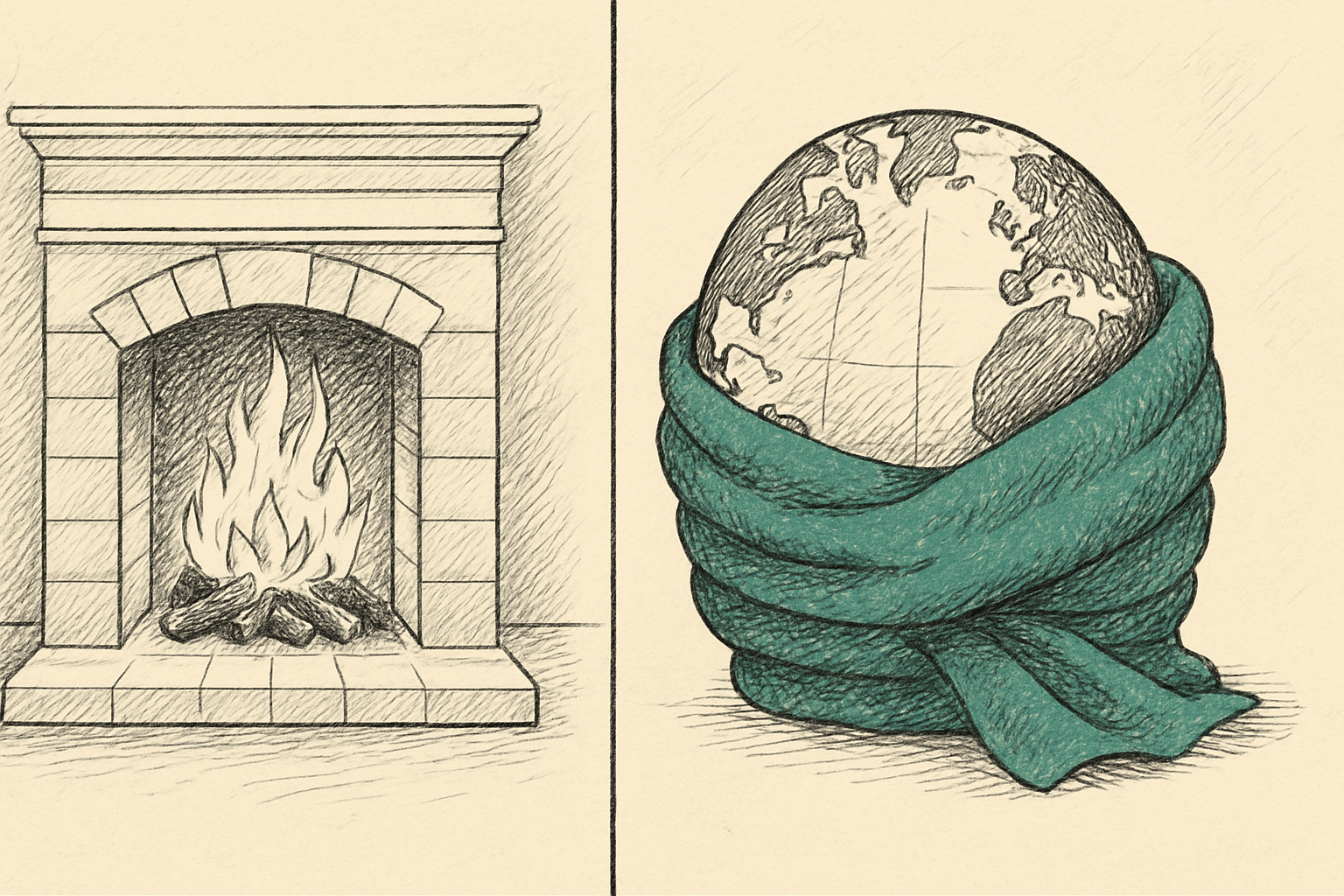
The entire confusion collapses into one question. Does the word describe a structure above a fireplace? If yes, spell it mantel. In every other situation—cloak, responsibility, or the geological engine driving plate tectonics—use mantle. Think of mantel as a specialist and mantle as a generalist. When uncertain, mentally substitute fireplace shelf. If the sentence still makes sense, you need the -el ending. If it sounds absurd, choose -le.
Mantel vs Mantle Examples in Real Sentences
Seeing these words in context hardwires the difference into your memory. Watch for clues: hearth, stocking, or oak signal mantel, while cloak, crust, or responsibility point to mantle. The examples below span homes, holidays, science, and literature. Reading each pair side by side trains your eye to spot the wrong ending instantly.
Examples
- The stockings hung from the mantel on Christmas Eve.
- Interior designers suggested a marble mantel to anchor the room.
- The cottage had a rough-hewn timber mantel above the stone hearth.
- She polished the brass clock that sat on the mantel.
- He accepted the mantle of leadership with quiet resolve.
- The expedition studied mineral samples from the upper mantle.
- A heavy mantle of fog covered the valley before dawn.
- The king threw his crimson mantle over the shivering child.
Notice that every sentence with mantel involves a fireplace.
Mantel vs Mantle Pronunciation: Why They Sound Identical
You cannot rely on your ears because these two are perfect homophones. Both mantel and mantle are pronounced /ˈmæntəl/, with stress on the first syllable and a schwa in the second. In rapid speech, the final syllable collapses into a soft murmur that reveals nothing about spelling. This shared sound is exactly why the mistake is so common. The divergence exists only in writing.
Where the Confusion Comes From: Mantellum and the 15th Century
Both words began life as one. They trace back to Latin mantellum, meaning cloak or covering, which entered English via Old French. For centuries, speakers treated the spellings as interchangeable variants. By the 15th century, manuscripts show scholars using mantle and mantel randomly for both cloaks and architecture. The modern split emerged gradually through convention, not by decree.
American vs British Usage: Which Spelling Do Style Guides Prefer?
American usage is straightforward. The Chicago Manual of Style and Merriam-Webster list mantel for the fireplace and mantle for everything else. British publishers are more permissive: older texts occasionally use mantle for the architectural feature, though this is now rare and considered archaic. The difference mirrors color versus colour. When in doubt, match your spelling to your audience and house style.
Mantel vs Mantlepiece vs Mantle Shelf: Related Words People Mix Up
The fireplace family tree has branches that cause spelling headaches. Mantelpiece is the traditional British term for the entire structure above the hearth. In American English, you are more likely to hear mantel shelf, specifying the horizontal surface only. Crucially, the correct spelling is mantelpiece, not mantlepiece. Some retailers mistakenly label products as mantle shelves, but careful buyers and editors will notice.
| Term | Region | Meaning |
|---|---|---|
| mantel | Universal (US preferred) | Fireplace shelf or surround |
| mantelpiece | Chiefly British | Entire framework above the hearth |
| mantel shelf | Chiefly American | Horizontal shelf only |
“Mantlepiece” is a misspelling; always use mantelpiece for the fireplace term.
Plural Forms: Mantels vs Mantles
Forming the plural is simple because both words follow the regular pattern of adding -s. Multiple ornamental shelves over several fireplaces are mantels. Multiple cloaks or geological layers are mantles. There are no irregularities. The only mistake is importing the wrong root into the plural. Let the singular choice dictate the plural, and you will stay consistent.
Examples
- The showroom had three antique mantels.
- The performers wore heavy velvet mantles.
Common Mistakes with Mantel and Mantle (and How to Avoid Them)
Even professionals slip here, so spotting frequent errors saves embarrassment. The biggest mistake is using mantle for a fireplace shelf in American English, a flaw seen in furniture ads and DIY blogs. Another misstep is using mantel for a cloak or figurative burden. Many people invent the hybrid mantlepiece. American listings sometimes use mantle out of uncertainty. In every case, the fix is the same: ask whether the object sits above a firebox.
- Using “mantle” for a fireplace shelf.
- Using “mantel” for a cloak or responsibility.
- Writing “mantlepiece” instead of “mantelpiece”.
- Using “mantle” for a fireplace in American copy.
- Confusing the plural forms.
Memory Tricks That Actually Work
When homophones refuse to differentiate by sound, your brain needs a visual anchor. The best mnemonics create an immediate mental image that locks spelling to meaning. Because mantel has only one purpose, tether it to a concrete feature. Mantle, with its broader portfolio, requires a flexible association. Choose one trick below and rehearse it twice.
- Step 1: Mantel ends in -el, like elevated — the shelf is elevated above the fire.
- Step 2: Mantle has the same -tle ending as little cloak — think of a cloak.
- Step 3: If you can hang a stocking on it, it is a mantel.
Pick one mnemonic and stick with it.
How to Self-Edit for Mantel and Mantle Errors
A reliable first draft means nothing if the wrong spelling survives into print. Before publishing, search your document for both words and apply the fireplace test to every instance. If you find mantle near fireplace, hearth, or shelf, verify that you meant the architectural feature. Reading aloud will not help because pronunciation is identical. Keep a sticky note with the rule—fireplace equals -el—on your monitor.
Mantel vs Mantle in Fireplace and Design Context
Understanding the word is easier when you picture the object. A complete mantel includes the shelf, vertical legs or pilasters, the surround framing the opening, and sometimes an overmantel. You may also see corbels projecting from the wall to support the shelf. Safety codes require a mantel above a working fireplace to sit at least twelve inches above the firebox. Hearth depth typically measures eighteen to twenty-four inches.
Mantel vs Mantle Quick Self-Test
The fastest way to cement a new rule is to test yourself. The five questions below cover fireplaces, fashion, geology, metaphor, and plurals. Treat this as rehearsal, not an exam. Click each question to reveal the answer. Once you score five out of five without hesitation, you have achieved automatic recall.
Answer: A) Mantel. The shelf above a firebox always takes the -el ending.
Answer: B) Mantle. Think of a loose outer garment.
Answer: B) Mantle. Geology uses mantle for this layer.
Answer: B) mantle. Figurative responsibility uses the -le spelling.
Answer: A) mantels. The plural follows the singular root.
FAQ
The answers below stand alone so you can reuse them directly. Some questions appear again and again in search bars and editorial meetings. Each restates the core rule in different language, giving you flexible phrasing for any context you face.
Frequently Asked Questions
The correct spelling is mantel. Mantle refers to a cloak, covering, or geological layer.
Mantel is the shelf or surround above a fireplace. Mantle is a cloak, a figurative burden, or the layer of Earth beneath the crust.
They are homophones with identical pronunciation, and both trace back to the Latin root mantellum.
In modern standard usage, no. Some older British texts use mantle for the fireplace, but this is now considered archaic.
In geology, the mantle is the thick, semi-solid rocky layer between Earth’s crust and its core.
Use the mnemonic: mantel ends in -el, like elevated, because the shelf is elevated above the fire.
Yes. Mantelpiece is the chiefly British term for the framework above the hearth. Note that “mantlepiece” is a misspelling.
Final Verdict on Mantel vs Mantle
Reserve mantel for the architectural feature above a fireplace, and let mantle handle cloaks, responsibilities, and planetary geology. The choice is not a matter of taste; it is a matter of context. American and British audiences largely agree on this split today. Trust the fireplace test, keep your mnemonic handy, and you will never second-guess yourself again.